
We want you to know how your child or pupil is doing
Regular and open communication is an important part of cooperation with the family for us. Parents should have an overview of what is happening in the kindergarten or school, how their child or pupil is developing and who they can turn to when they need to solve something. That is why we combine everyday information with personal contact and regular feedback.
When something needs to be addressed, we don’t wait. We share important information about the learning, development or well-being of a child or pupil on an ongoing basis. The goal is for parents to have a clear picture of how their child is doing, and at the same time to know that they can turn to us at any time.
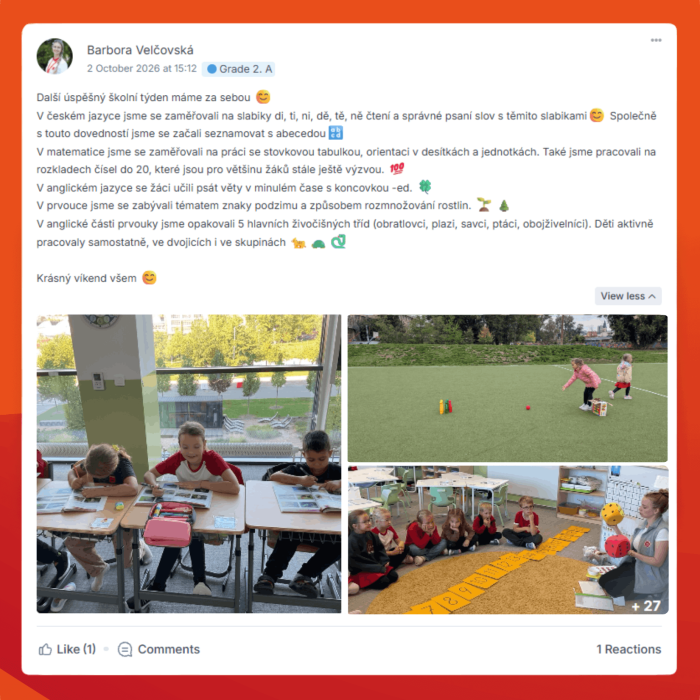
use Kinderpedia for everyday communication. Here you will find important information, photos, news, a calendar of events and practical documents from the life of the kindergarten and school.
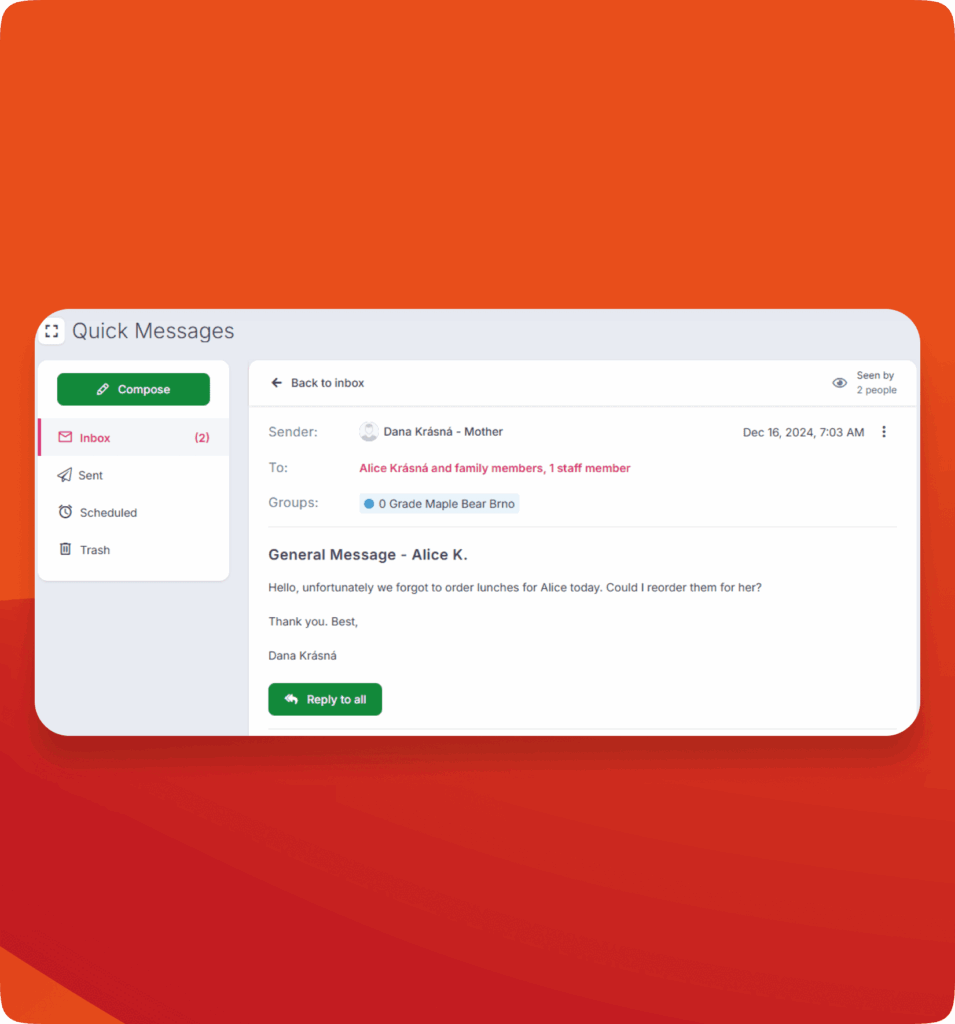
on the situation, parents can contact the teacher, reception or kindergarten or school management. We want it to always be clear who can help with a particular question or situation.
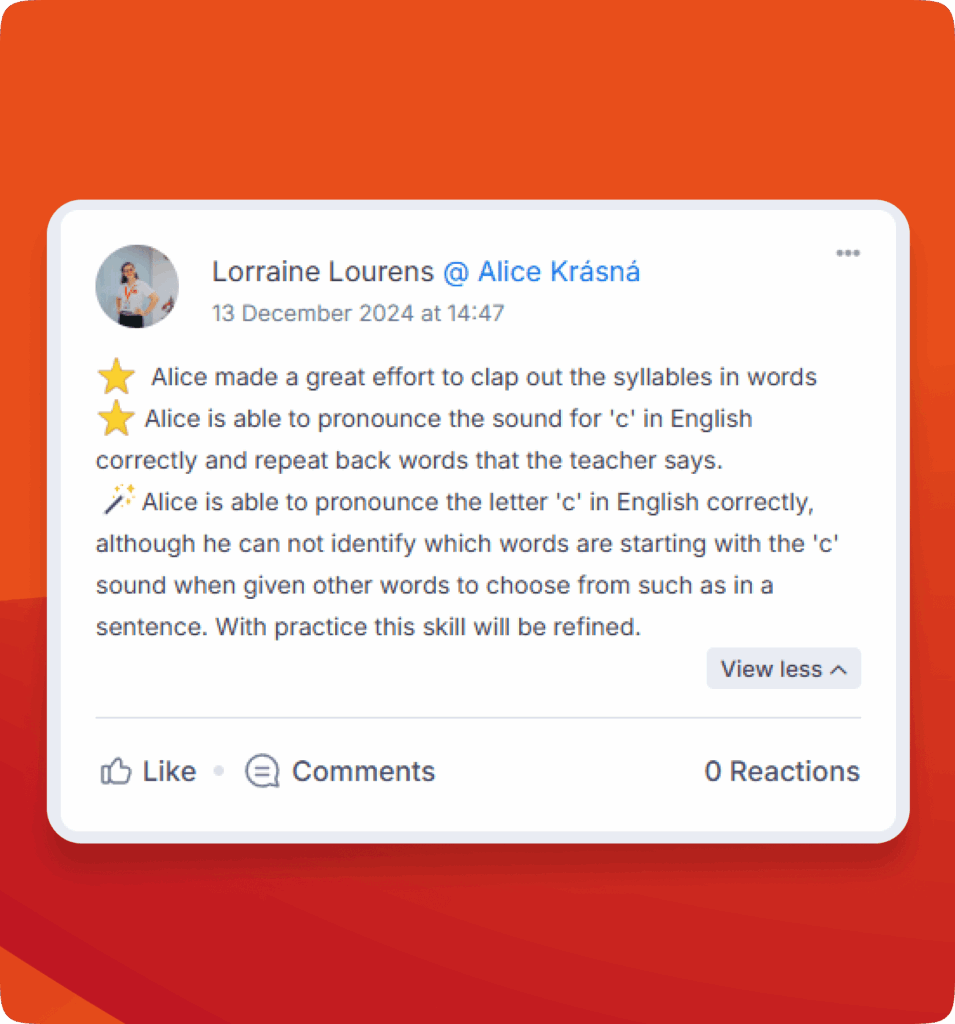
When a child or pupil is doing well, needs support or it is appropriate to discuss something together, we do not wait for a formal assessment. Teachers communicate with parents on an ongoing basis according to current needs.
At school, parents receive a more comprehensive overview of the pupil's progress four times during the year: in November, January, April and June. The assessment shows the progress, strengths and areas for further development.
For us, communication is not just about passing on information. It also includes tripartites, i.e. joint meetings of the child or pupil, the parent and the teacher. Together, we look at progress, strengths, motivation and other goals and look for how to best support the child or pupil.
We lead children and pupils to be able to think about what they are doing well, what has been challenging for them and where they want to move next. In this way, we support their independence, self-reflection and gradual assumption of responsibility for their own learning.