Solid Czech foundations, natural English, and teaching that children enjoy and find meaningful.
At Maple Bear Brno, we connect the Czech educational program with proven principles of Canadian education. Parents thus do not have to choose between quality Czech, English, and a modern way of teaching. Students gain solid foundations according to the Czech educational system while naturally learning and communicating in both Czech and English every day.
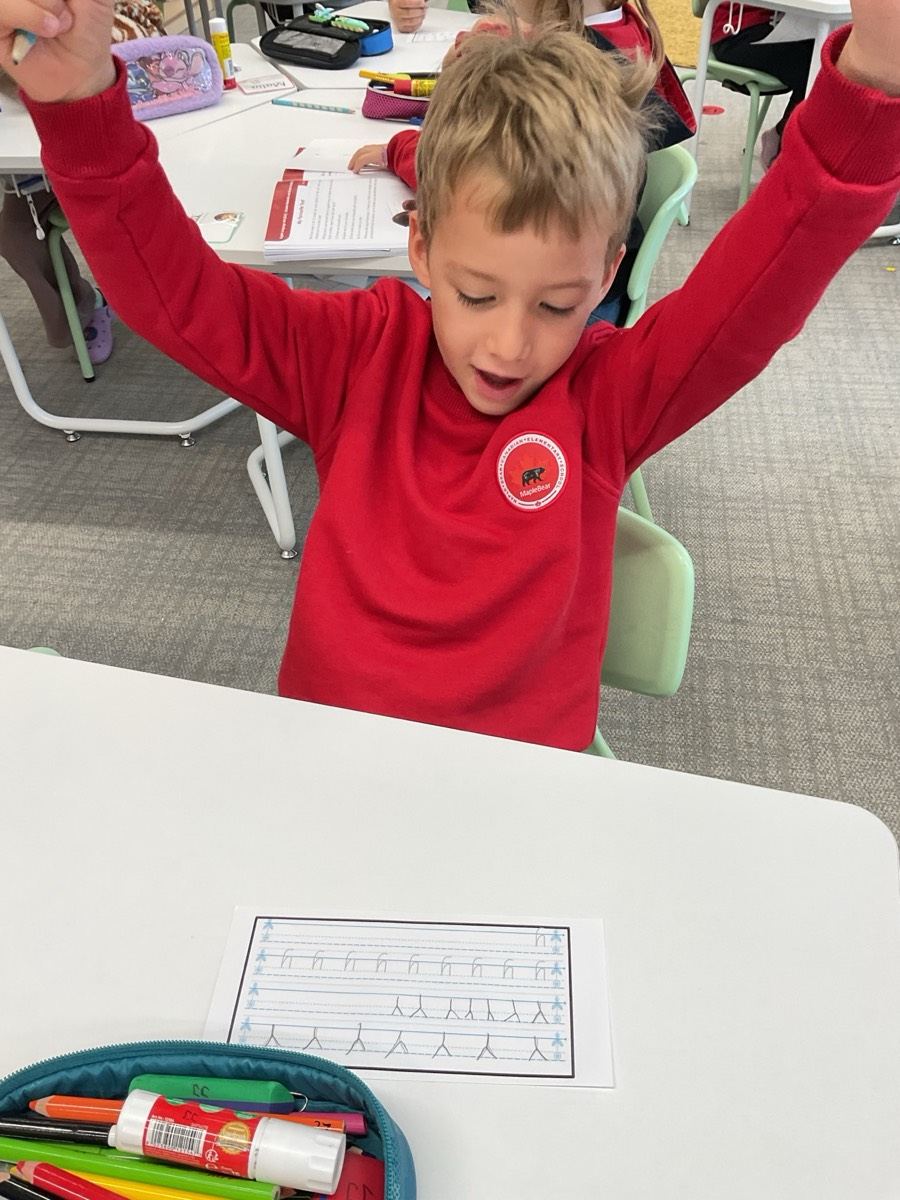
However, we do not want children to take away only the right answers from school. We want them to enjoy the process of discovery itself, to ask questions, experiment, look for their own solutions, and gradually develop an inner motivation to keep learning. That is why they are not just listeners during lessons; they are an active part of them.
From the 2027/2028 school year, our preschool preparatory year is part of the Maple Bear Brno kindergarten. It builds on the experience of our current Year 0 and preserves its strengths: a bilingual environment, active learning, an individual approach, and targeted preparation for starting school.
Our students master everything they need according to the Czech educational system. The difference lies primarily in how they acquire new knowledge. We do not want them to just hear a new concept, write it down, and memorize it. We want them to truly understand it, be able to connect it with their own experience, and know how to use it in practice.
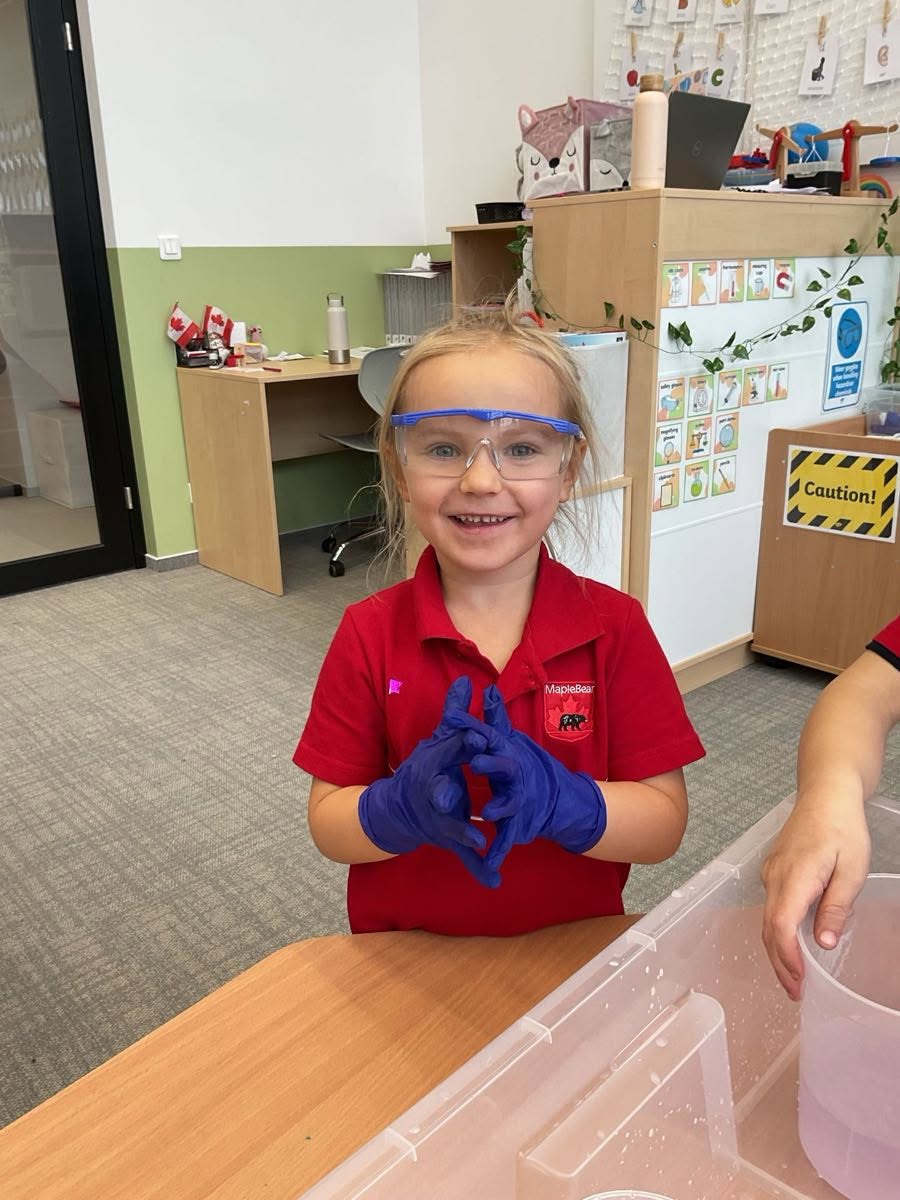
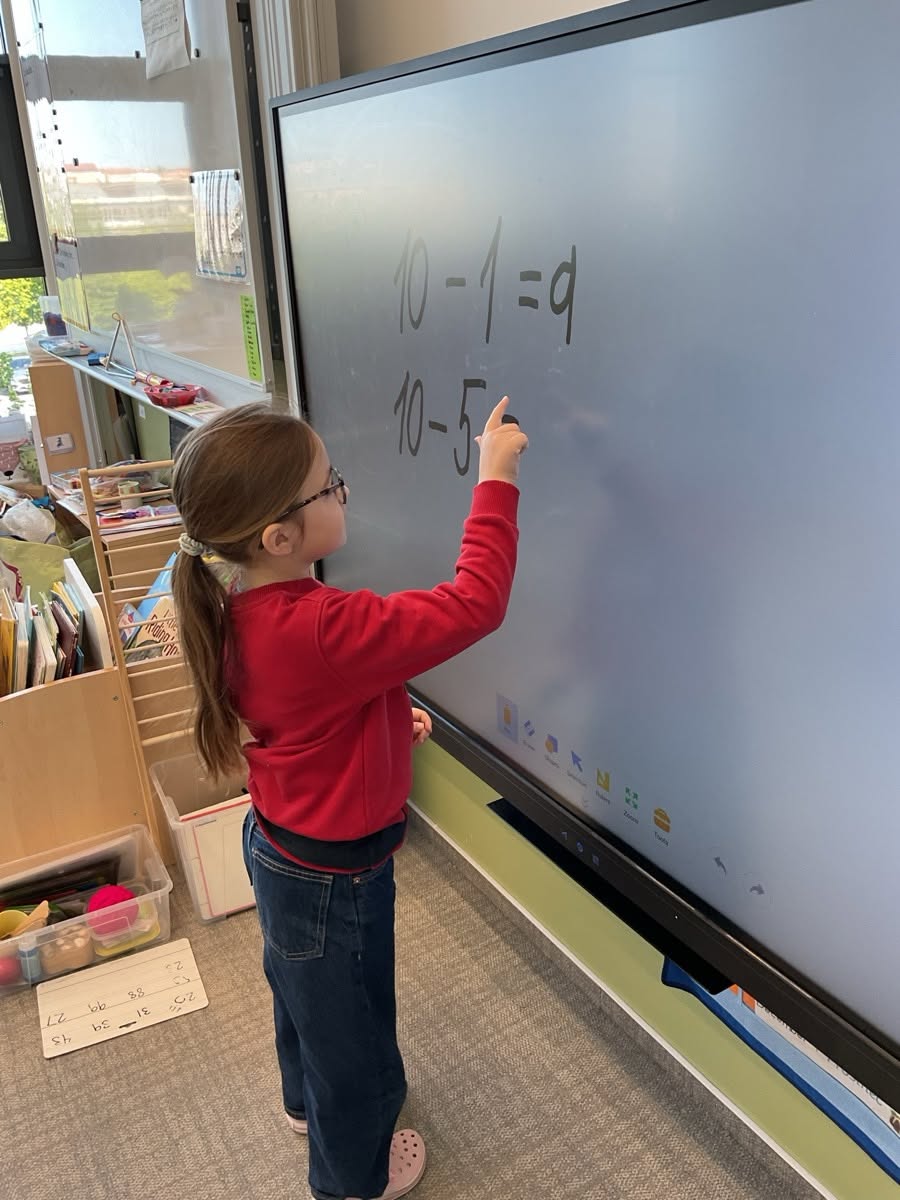
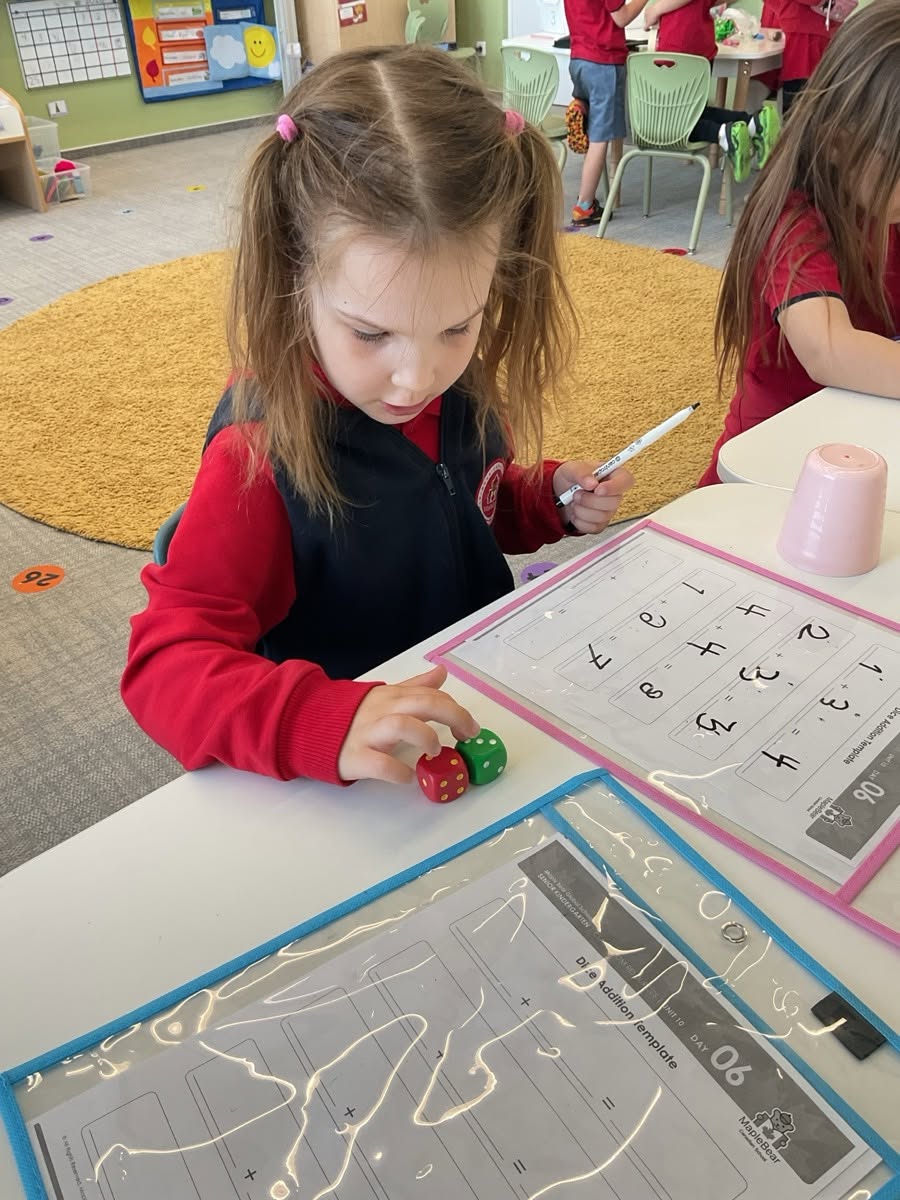
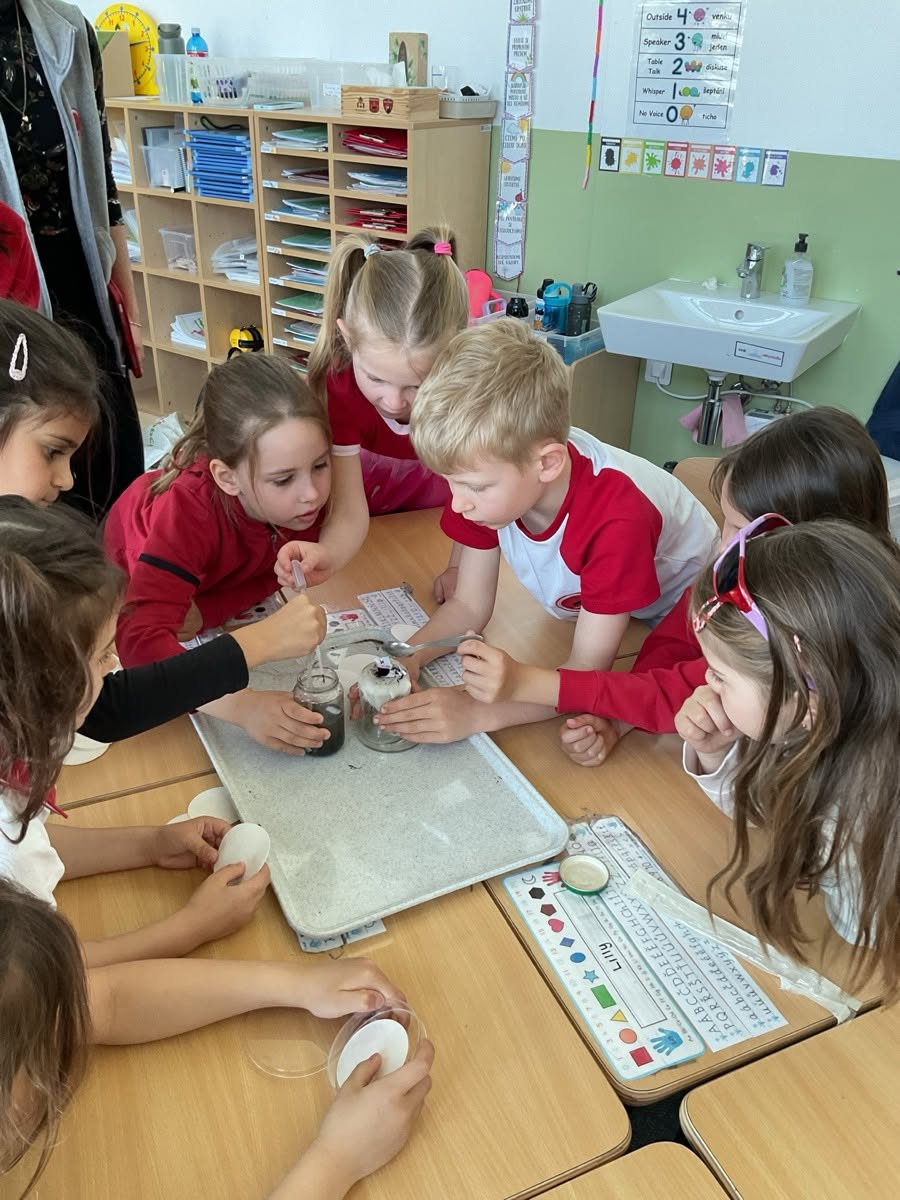
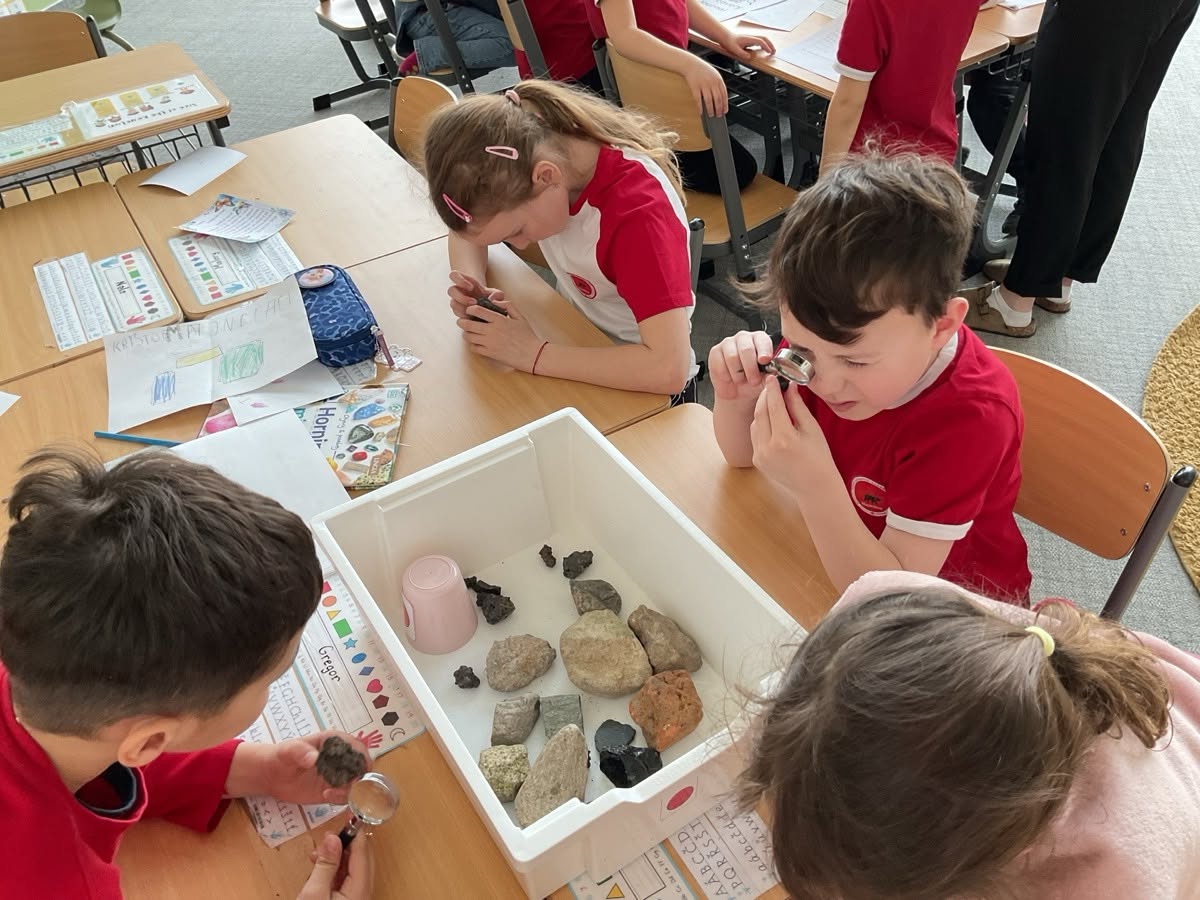
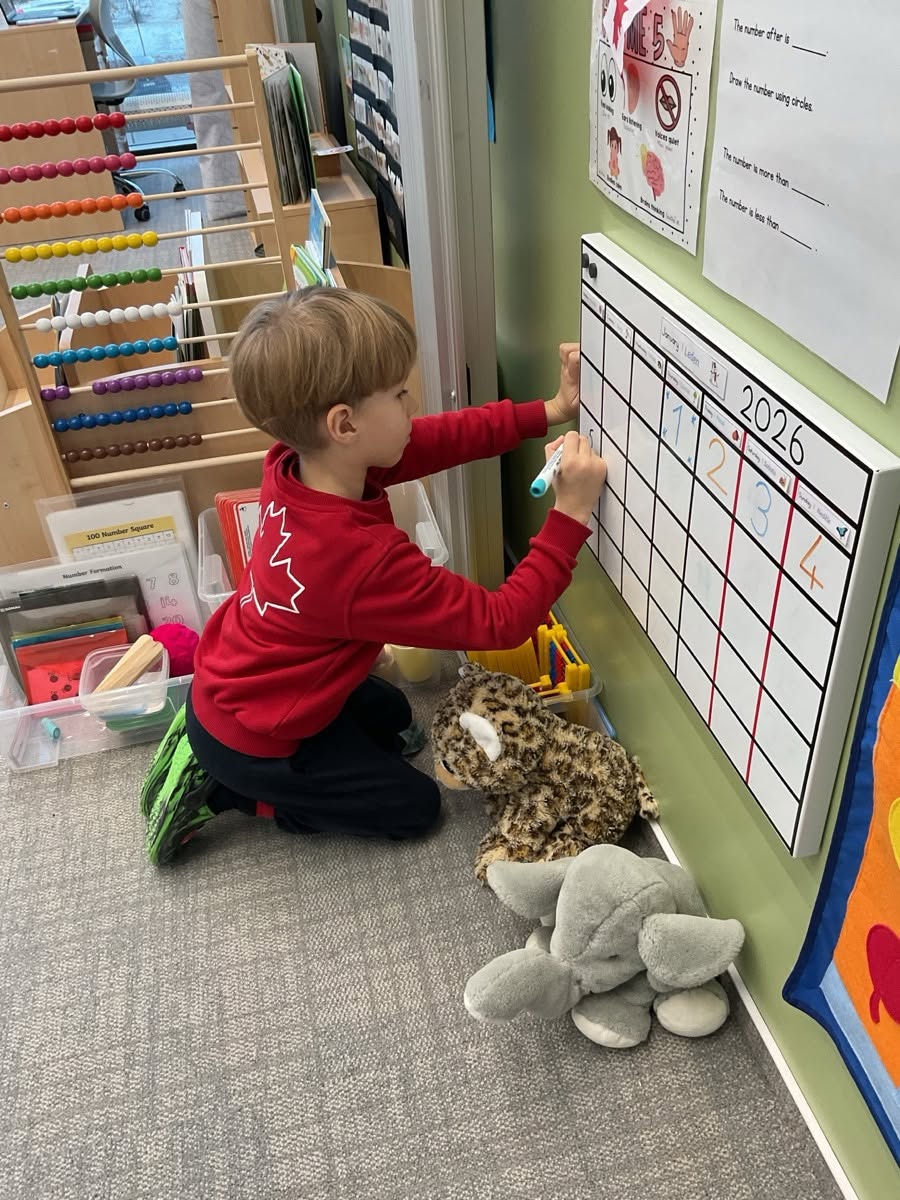
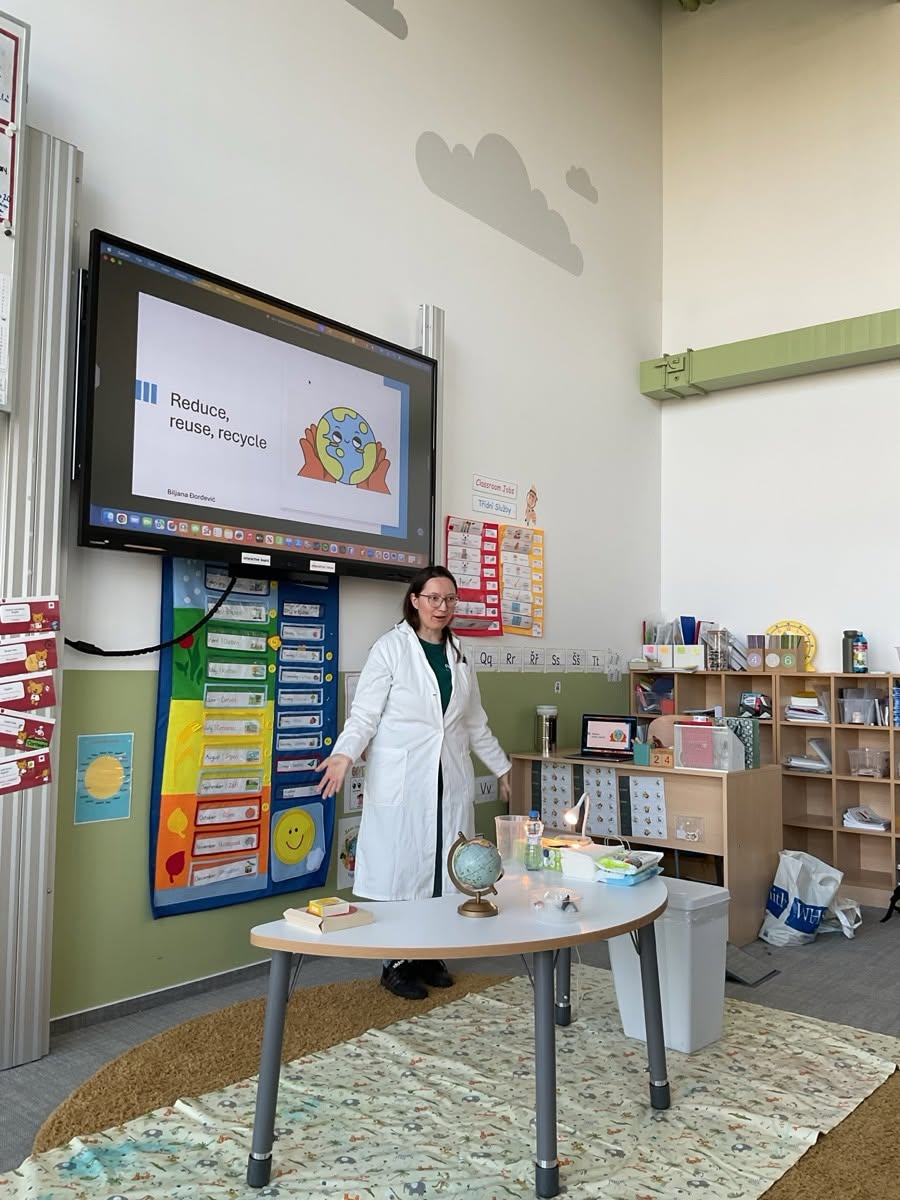
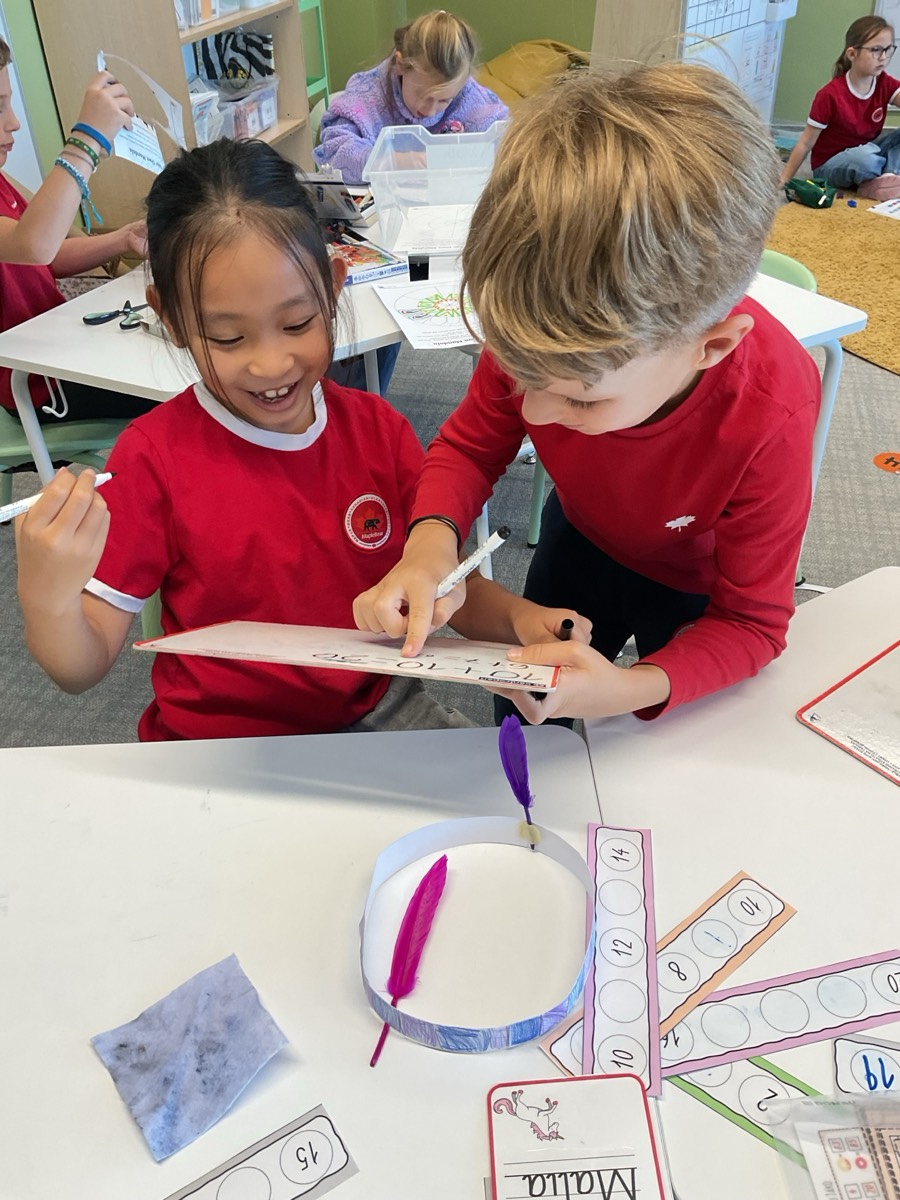
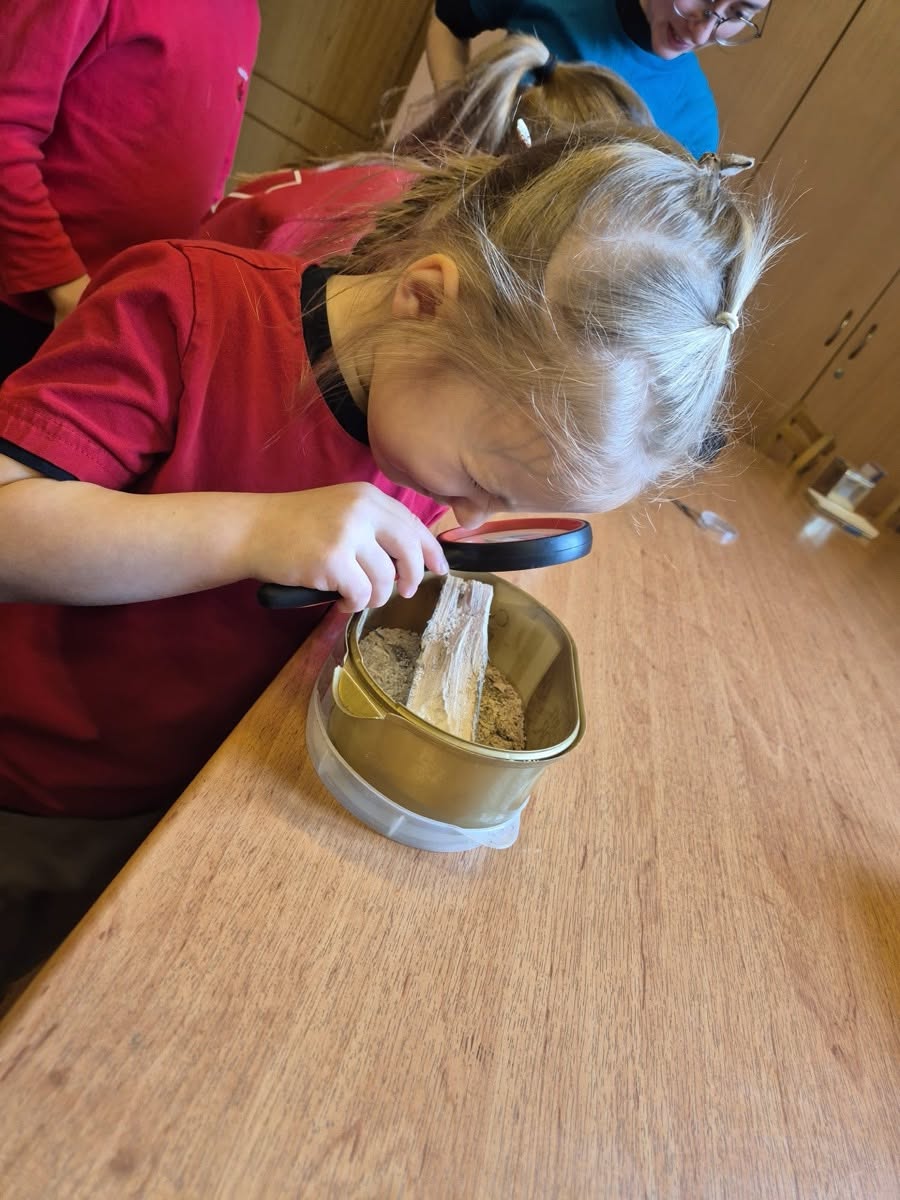
That is why teaching often begins with a question, a problem, or a specific experience. When students learn about temperature or the states of water, they can hold ice in their hands, describe what they feel, observe its change, measure the temperature, and only then together name what has just happened. In mathematics, they work with objects, models, and illustrative aids—assembling, moving, measuring, and comparing. They do not just hear a new principle, but see it, experience it, and try it out for themselves.
We involve different ways in which children naturally learn about the world: movement, sight, hearing, touch, conversation and their own experience. Thanks to this, new knowledge is not just abstract information for them, but something they really understand and can remember better.
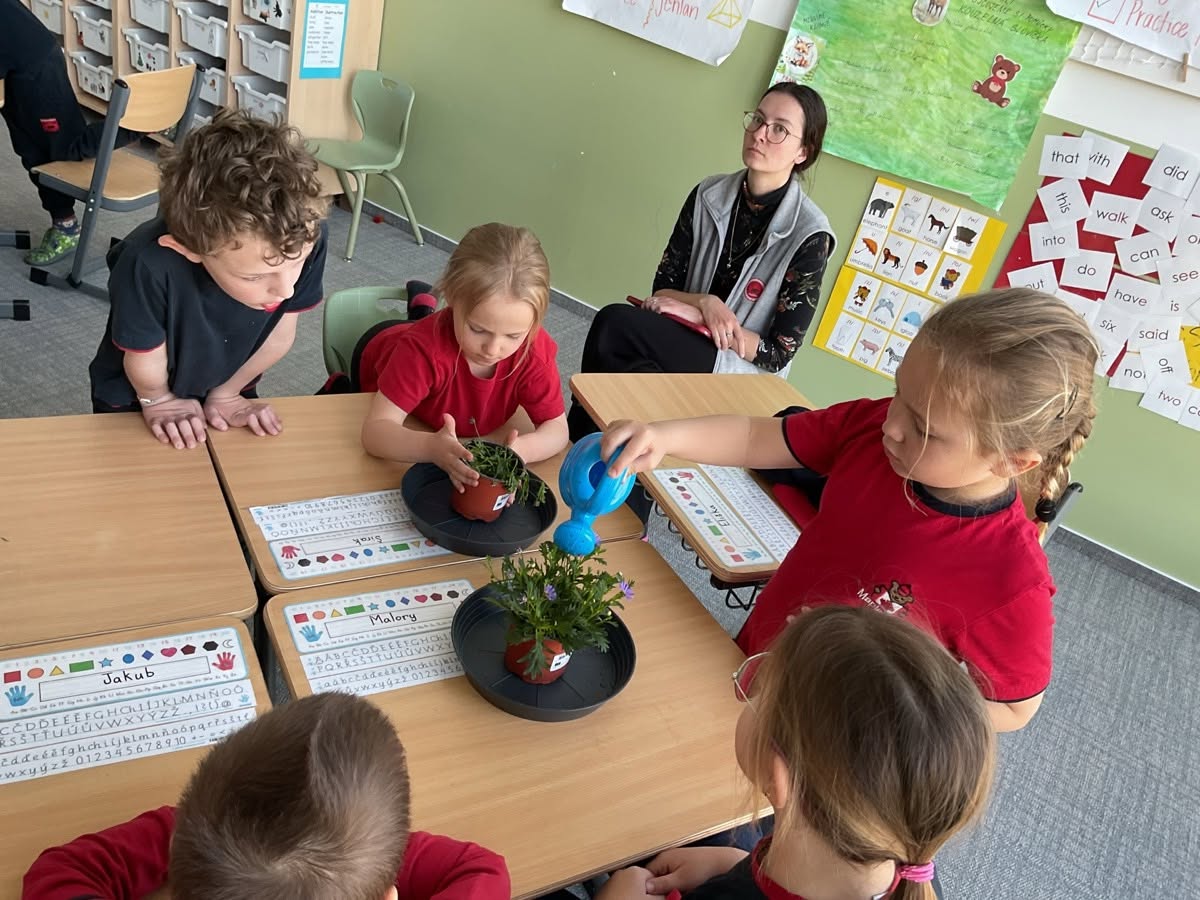
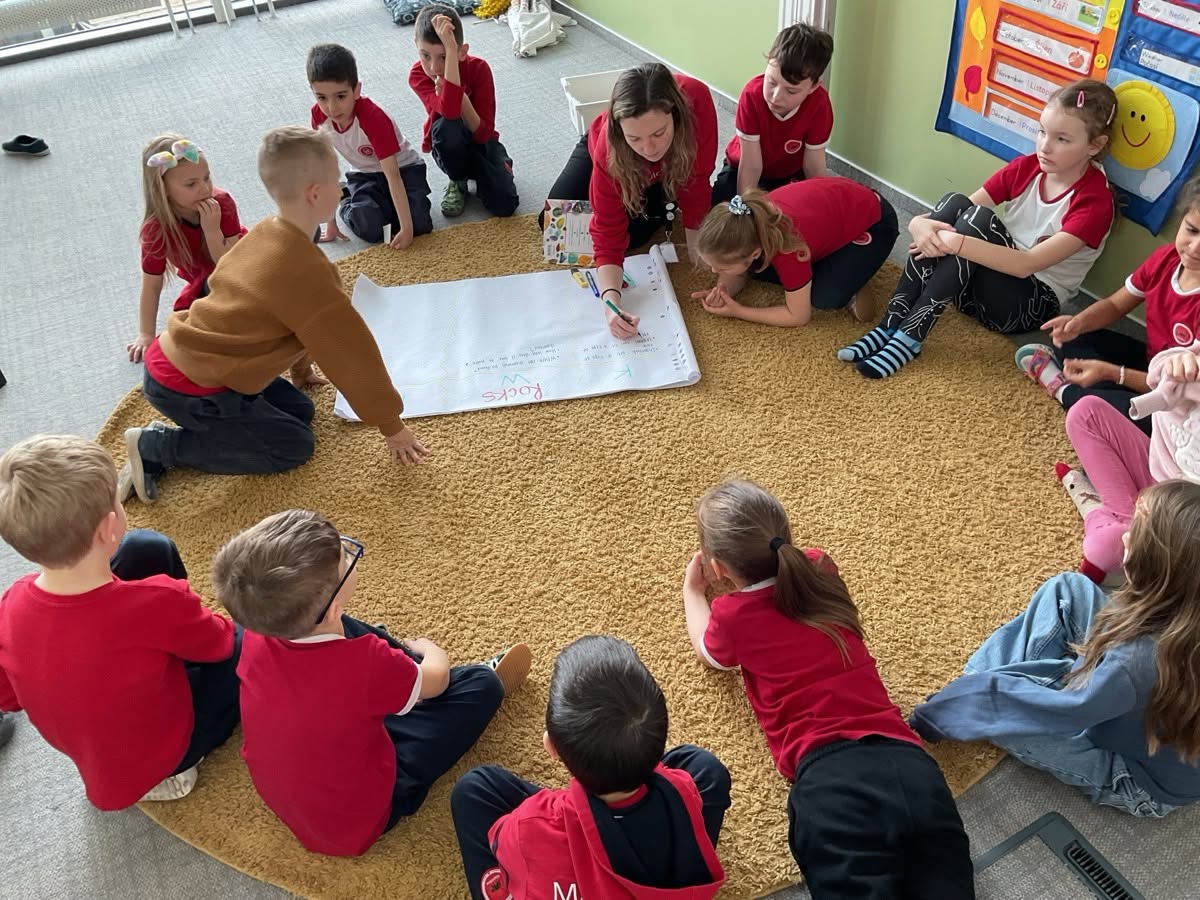
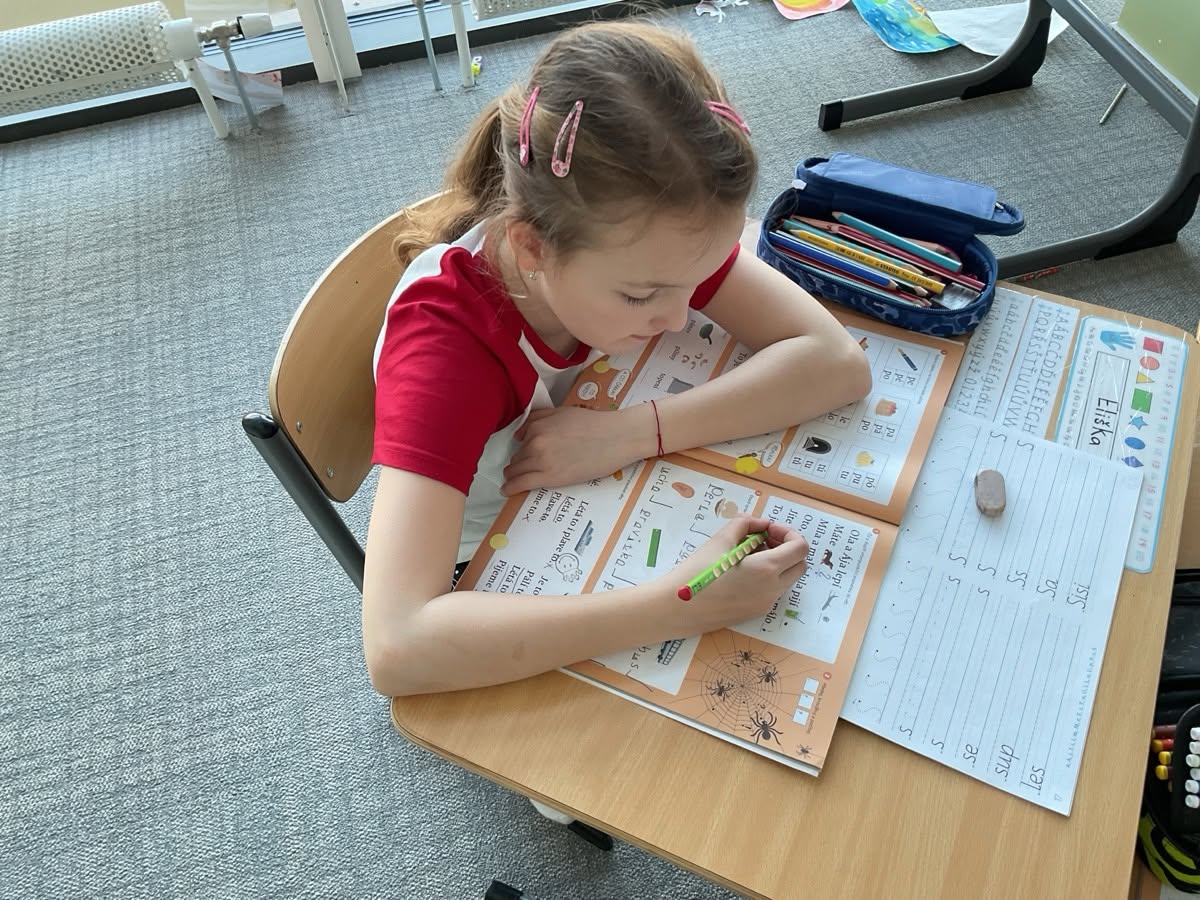
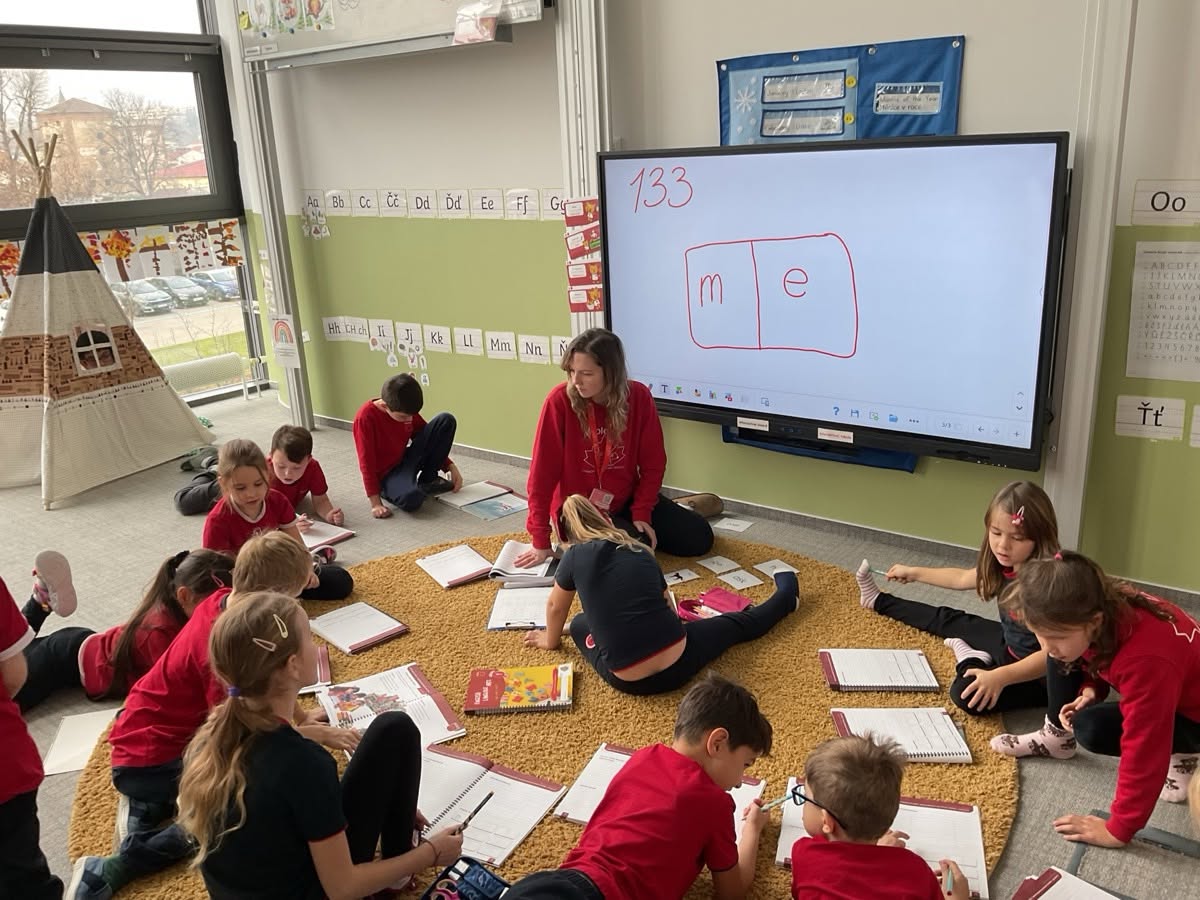
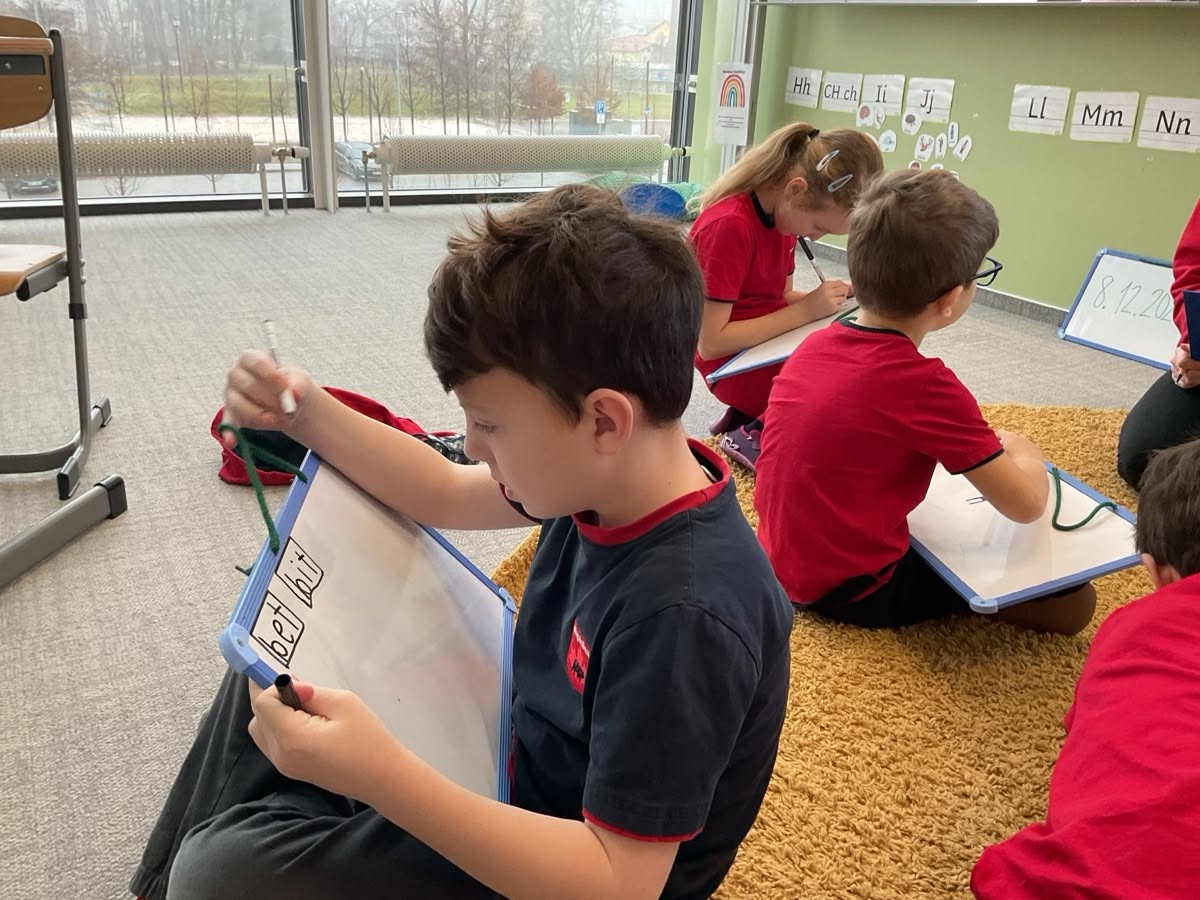
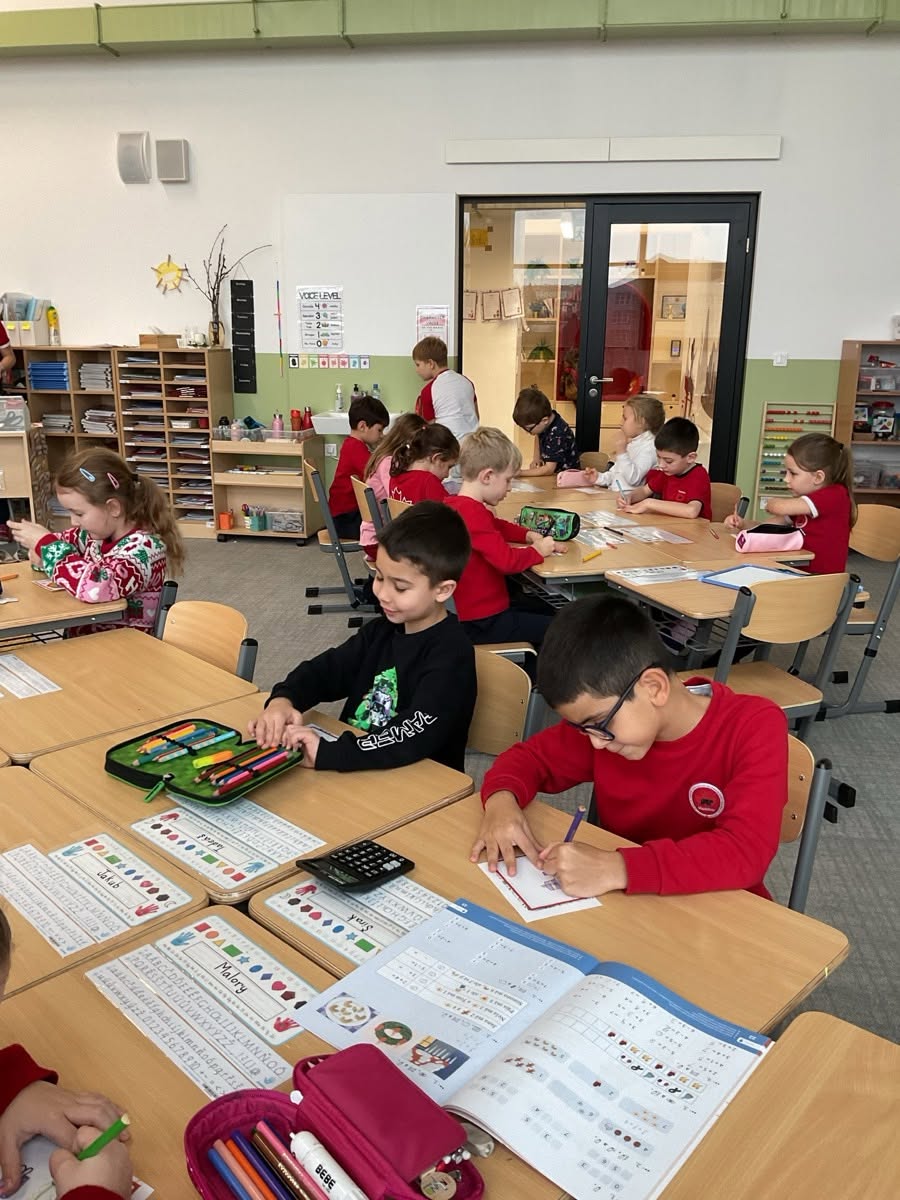
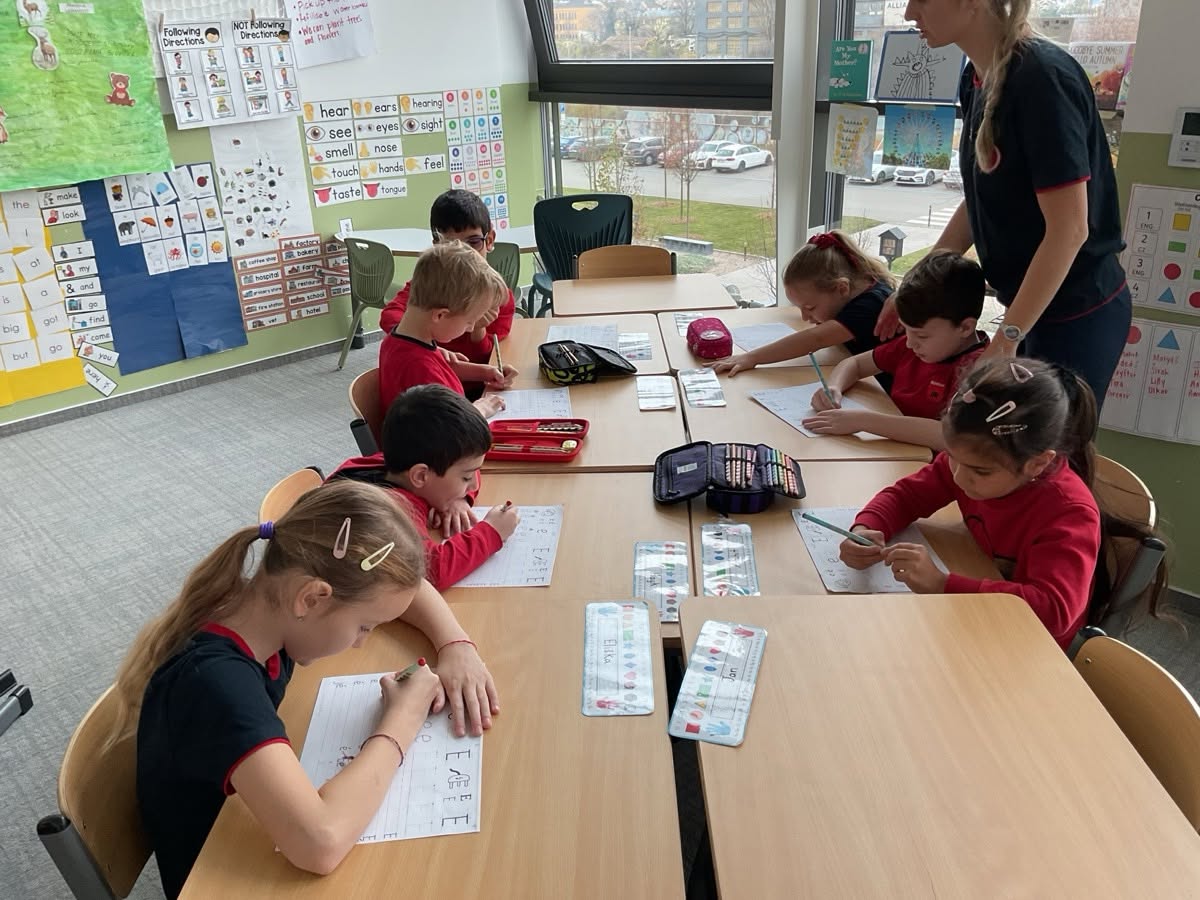
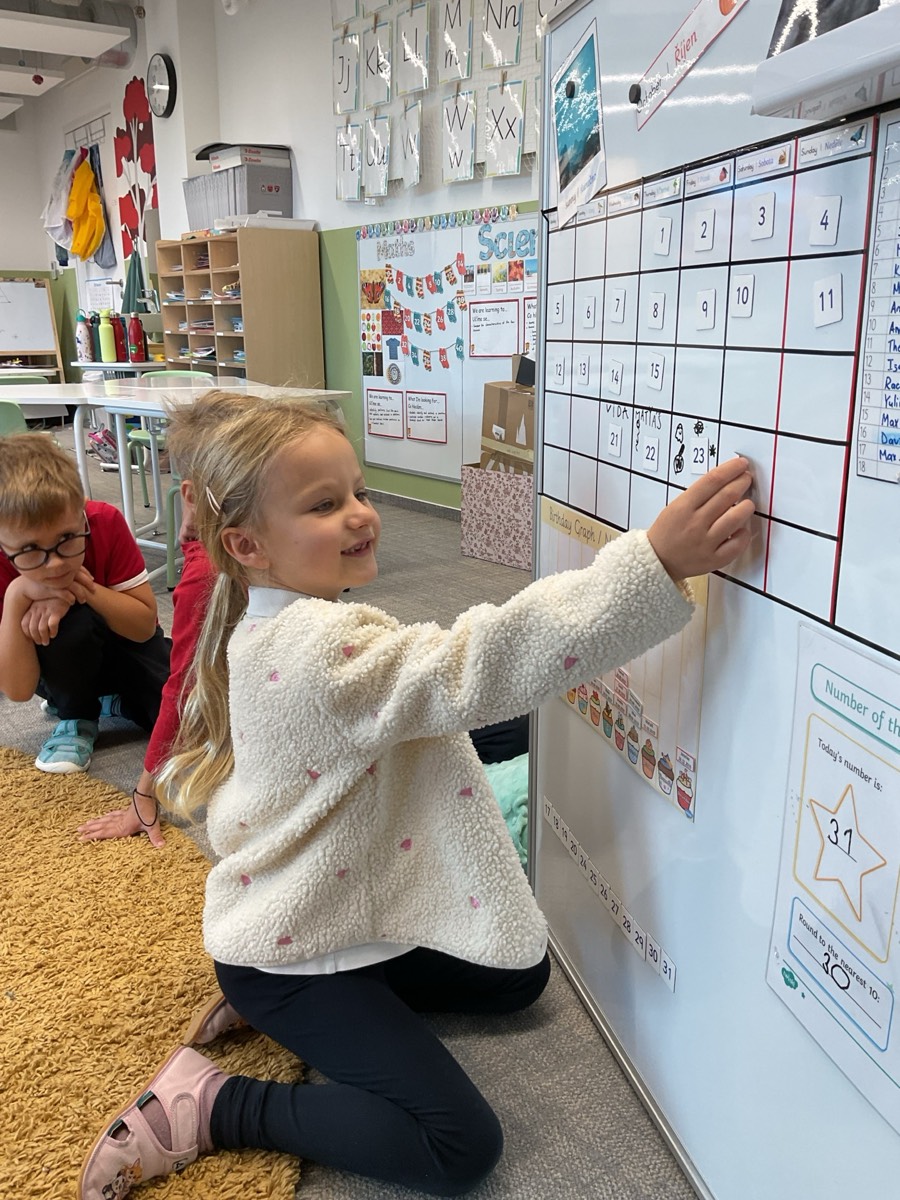
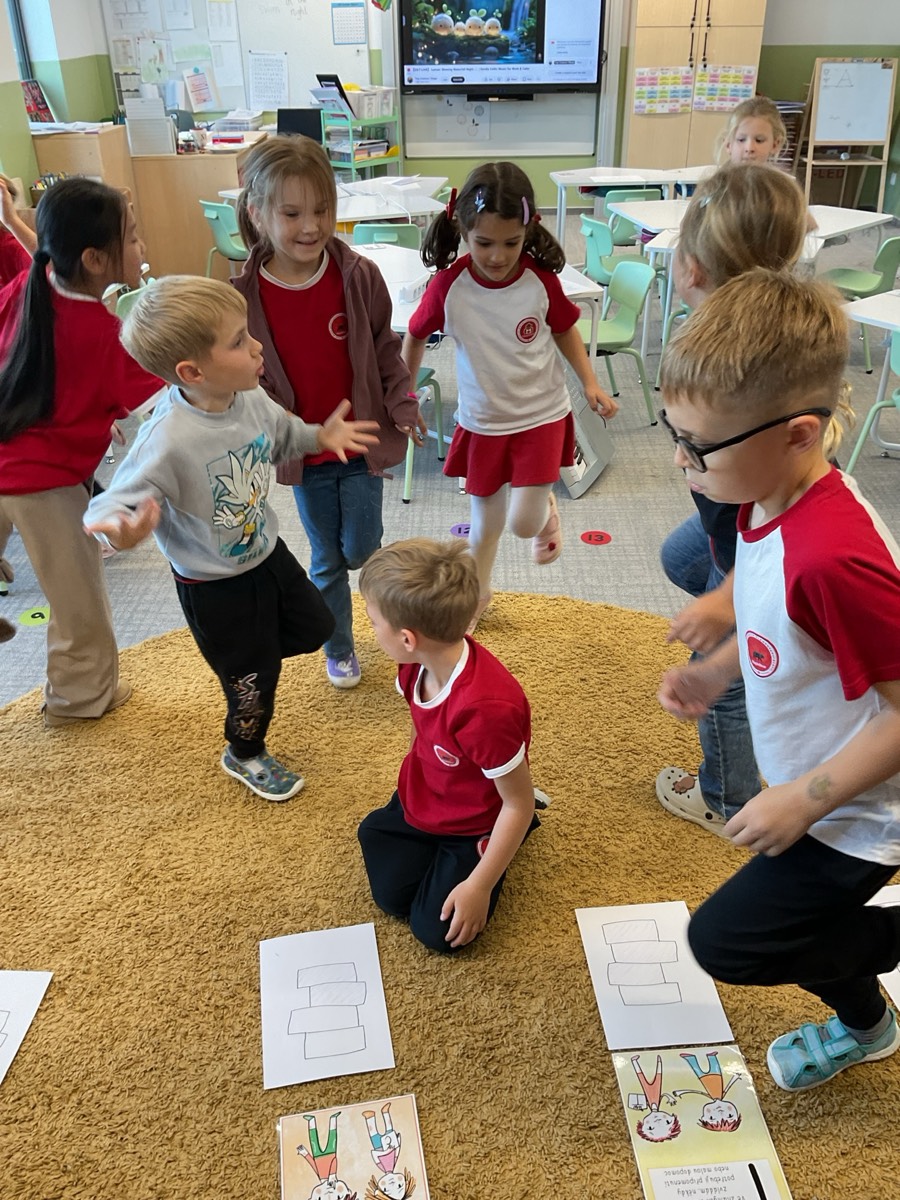
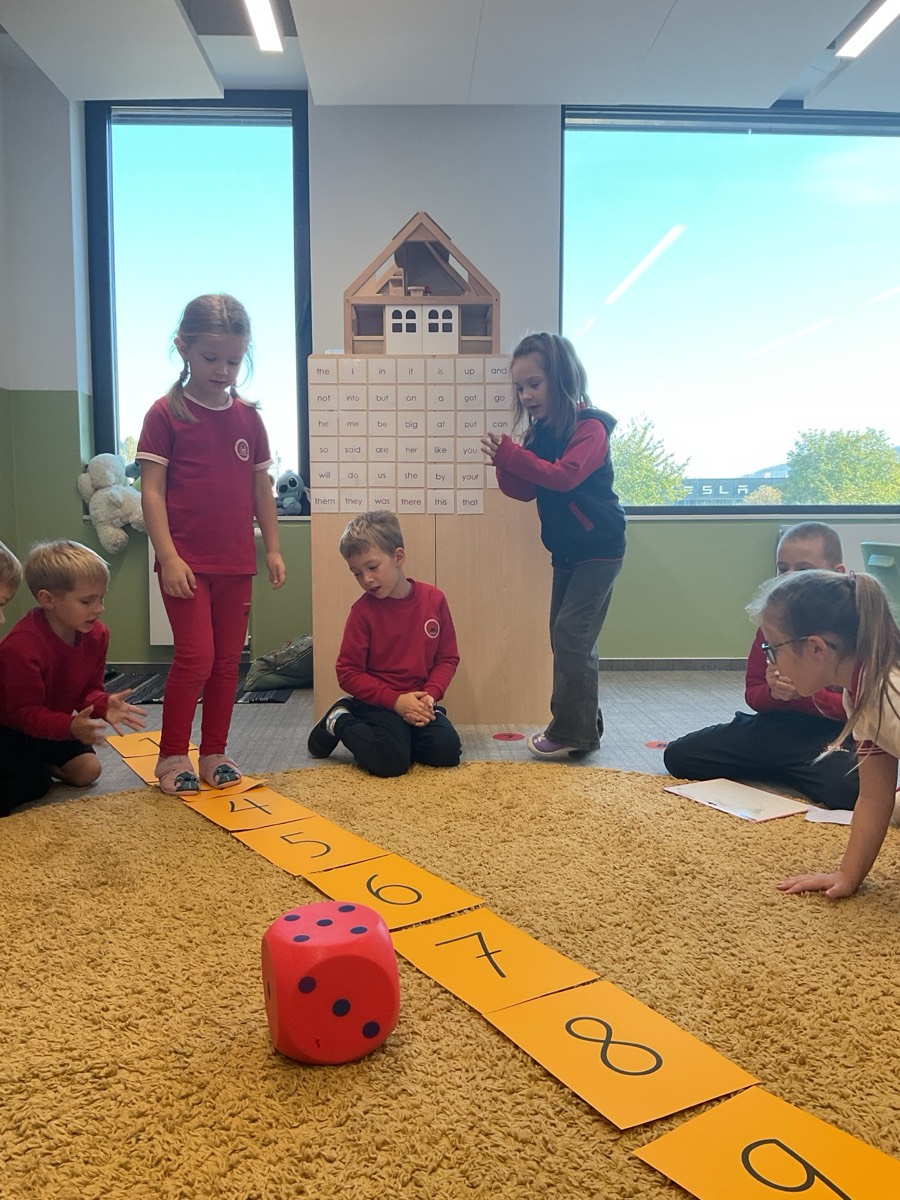
Pupils do not sit in just one place during lessons. Depending on the type of activity, they naturally move around the classroom, working independently, in pairs or in smaller groups, sometimes at tables, sometimes on the carpet or in another part of the classroom. We use space to support the way they are learning.
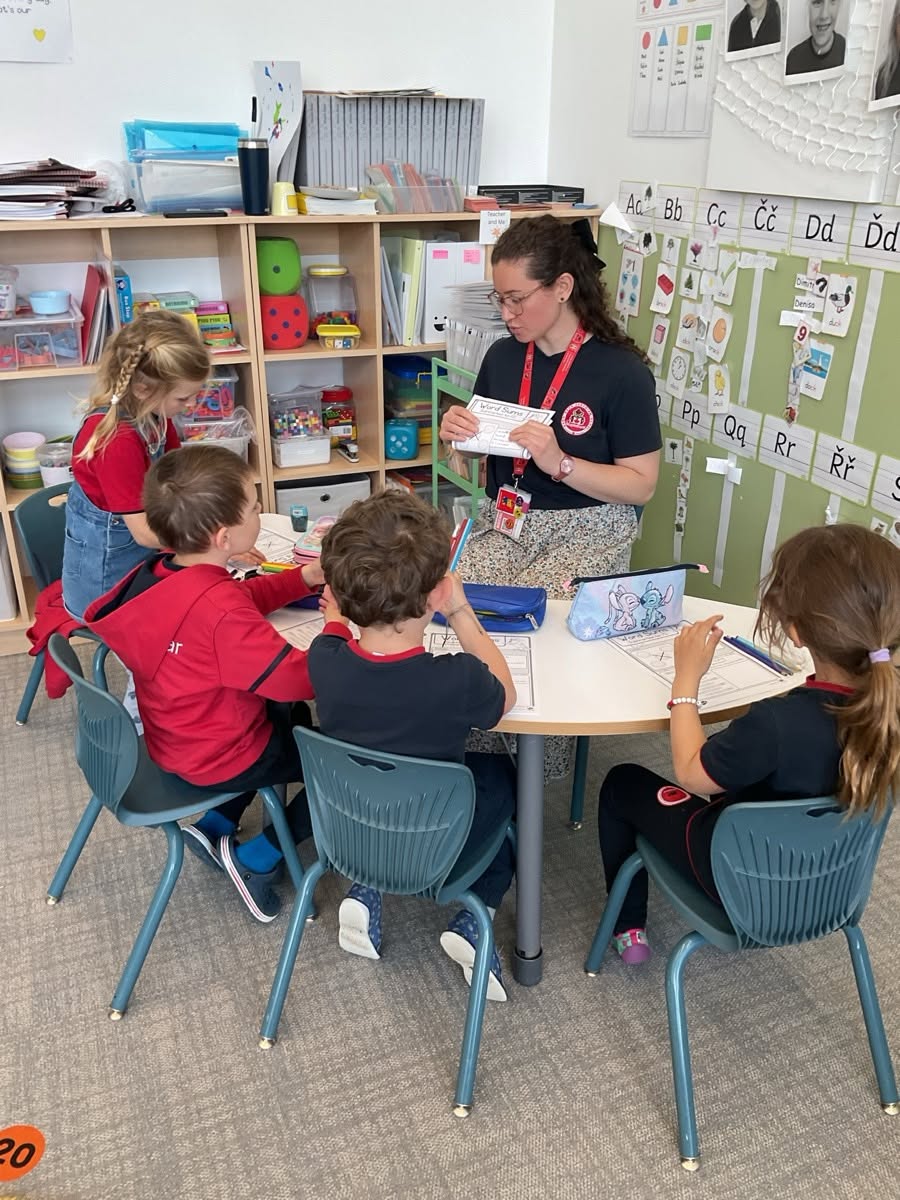
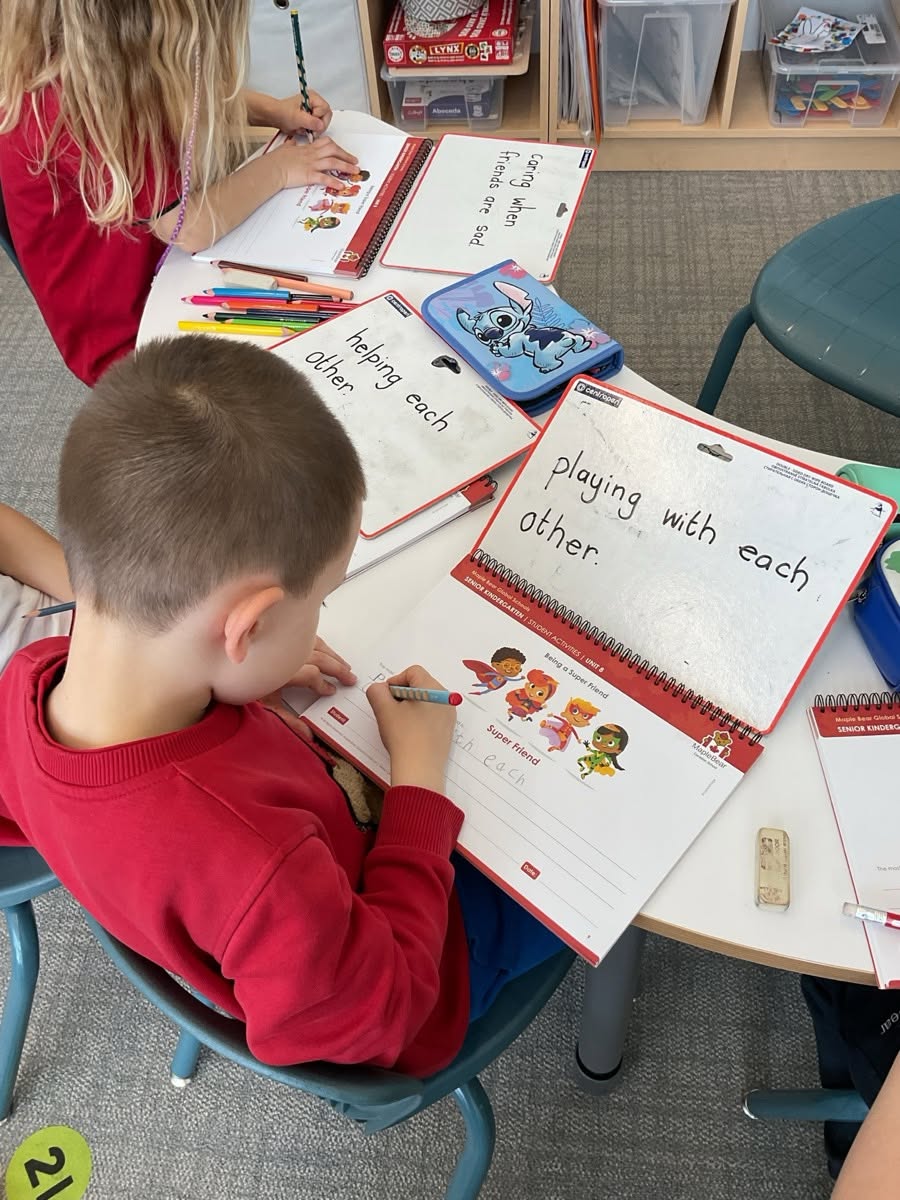
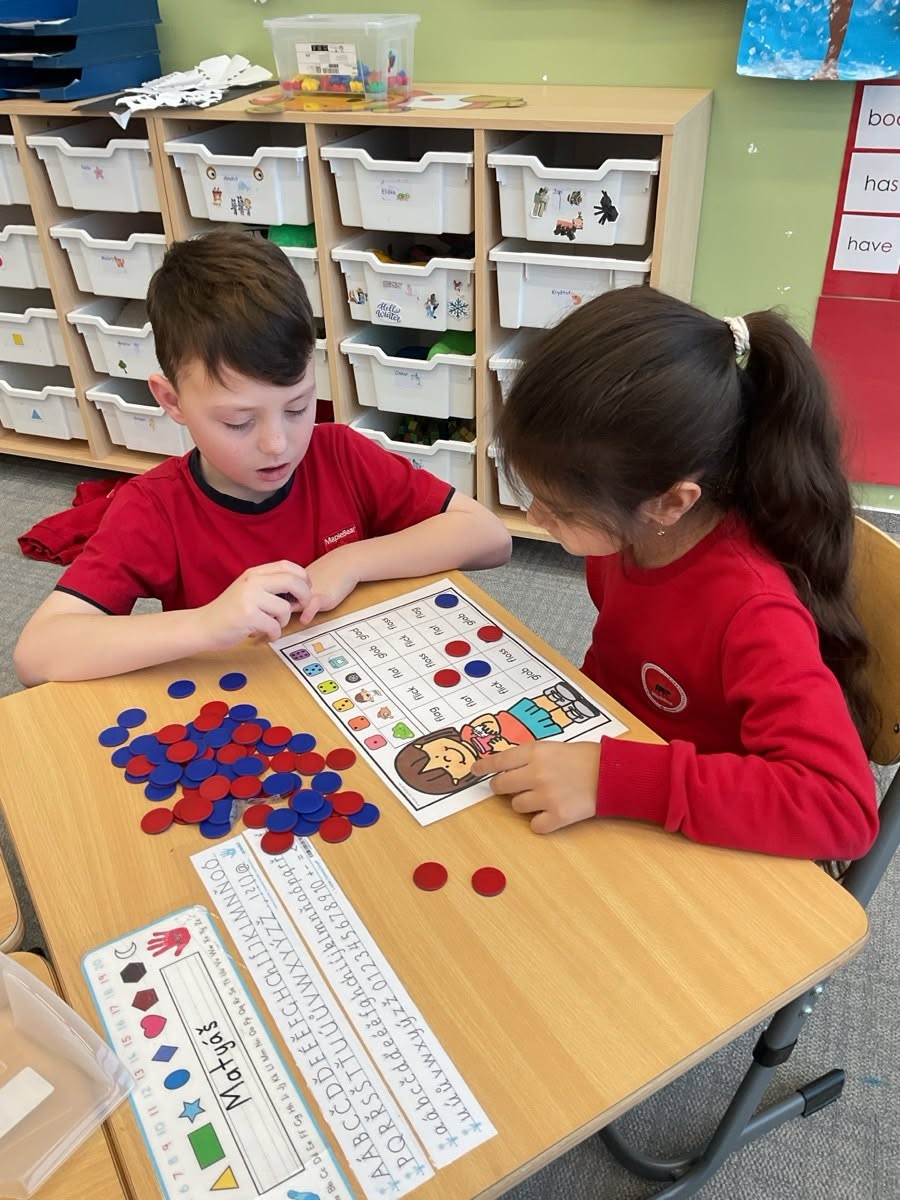
An important part of teaching is also the learning centers, where students rotate between individual stations and engage in various types of activities. In one center, they might read and work with text; in another, solve a math task using aids; elsewhere, they might experiment, create, or discuss a specific problem. This way of working gives children more space for active involvement, cooperation, and independence, and allows teachers to better respond to the different needs of individual students.
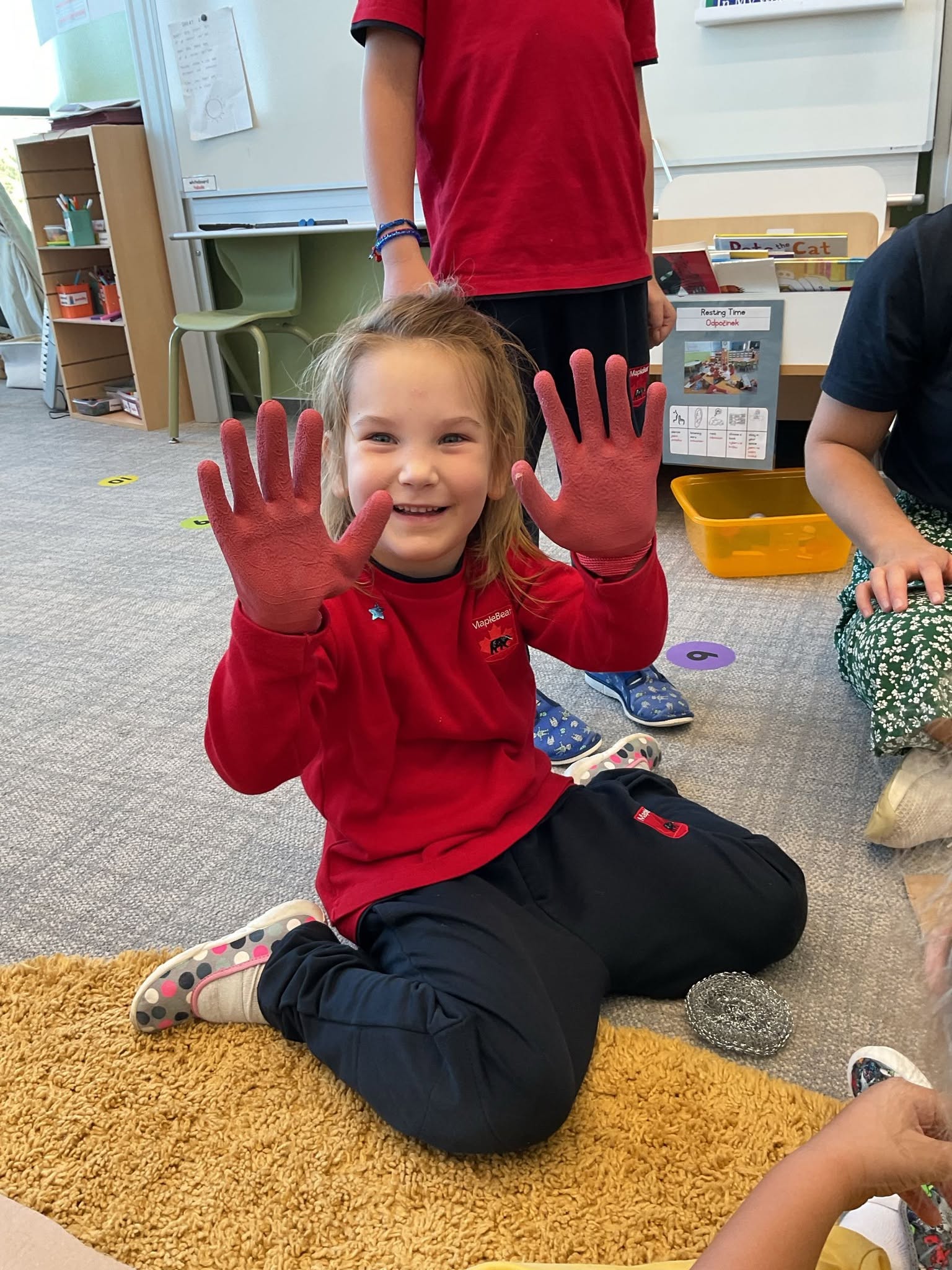
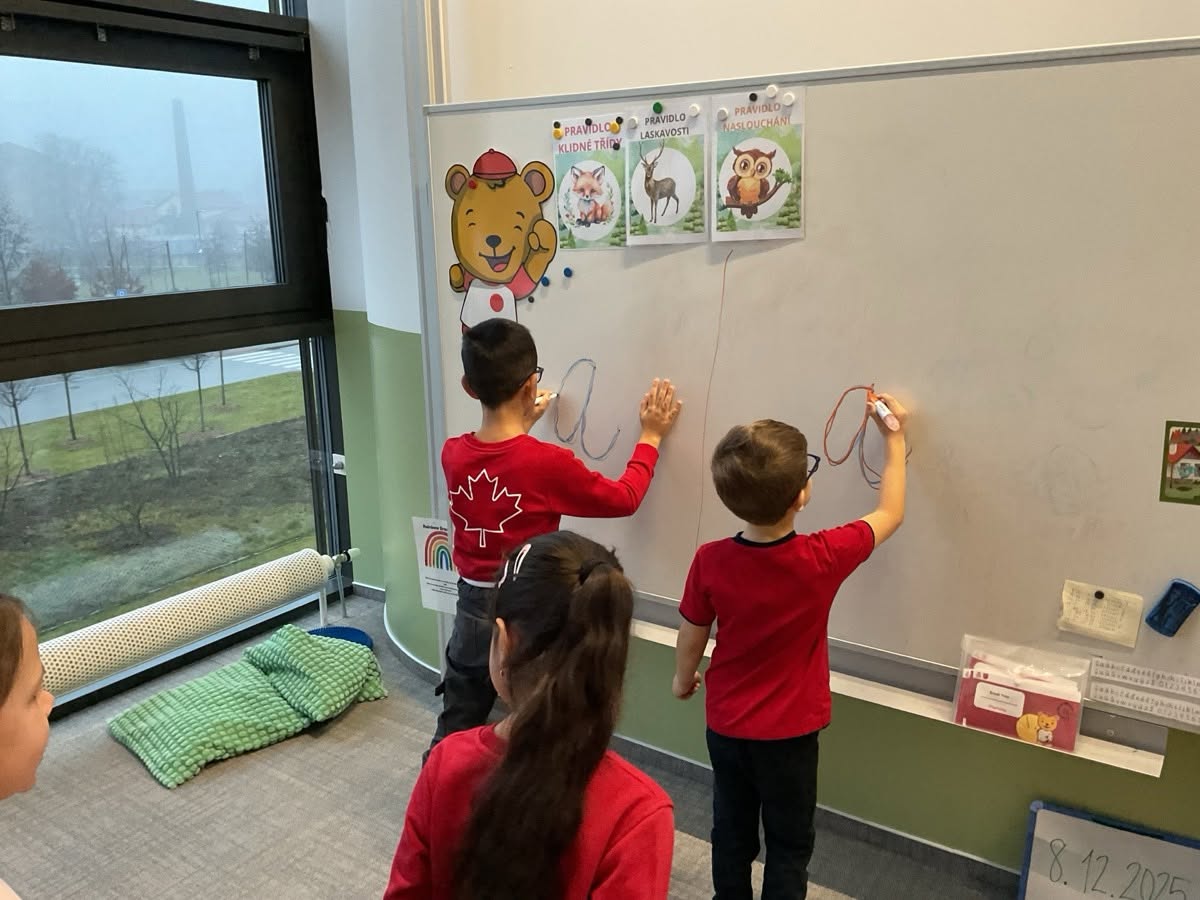
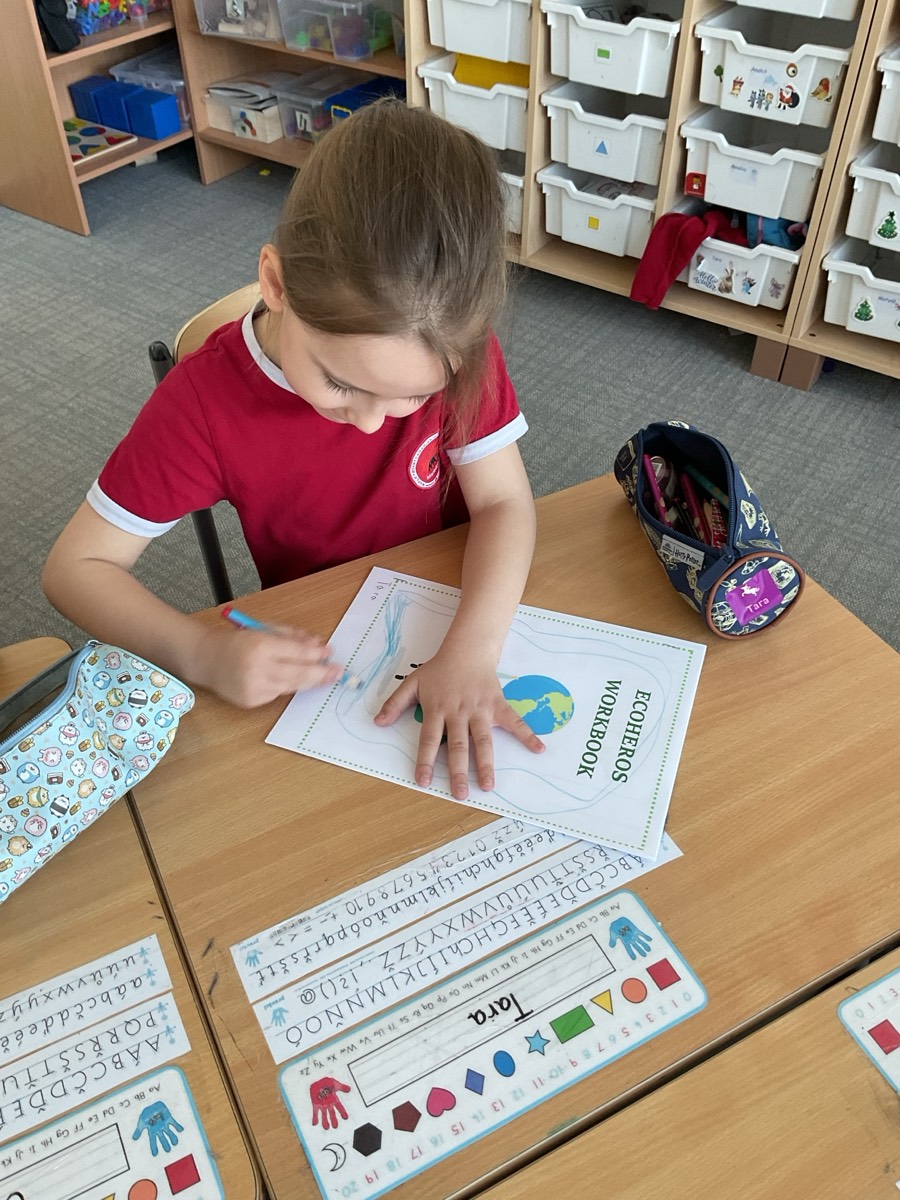
We use projects, experiments, practical tasks, books, building kits, illustrative aids, technology, movement, and discussion. Students can build, measure, test, draw, compare, explain something to a classmate, or use it to solve a specific problem.
It is also important for us that children enjoy the learning process itself. Not because every moment at school has to be fun, but because we want them to experience the joy of discovery, of having figured out something on their own or having achieved something. It is from these experiences that inner motivation, curiosity and the desire to continue learning gradually grow.
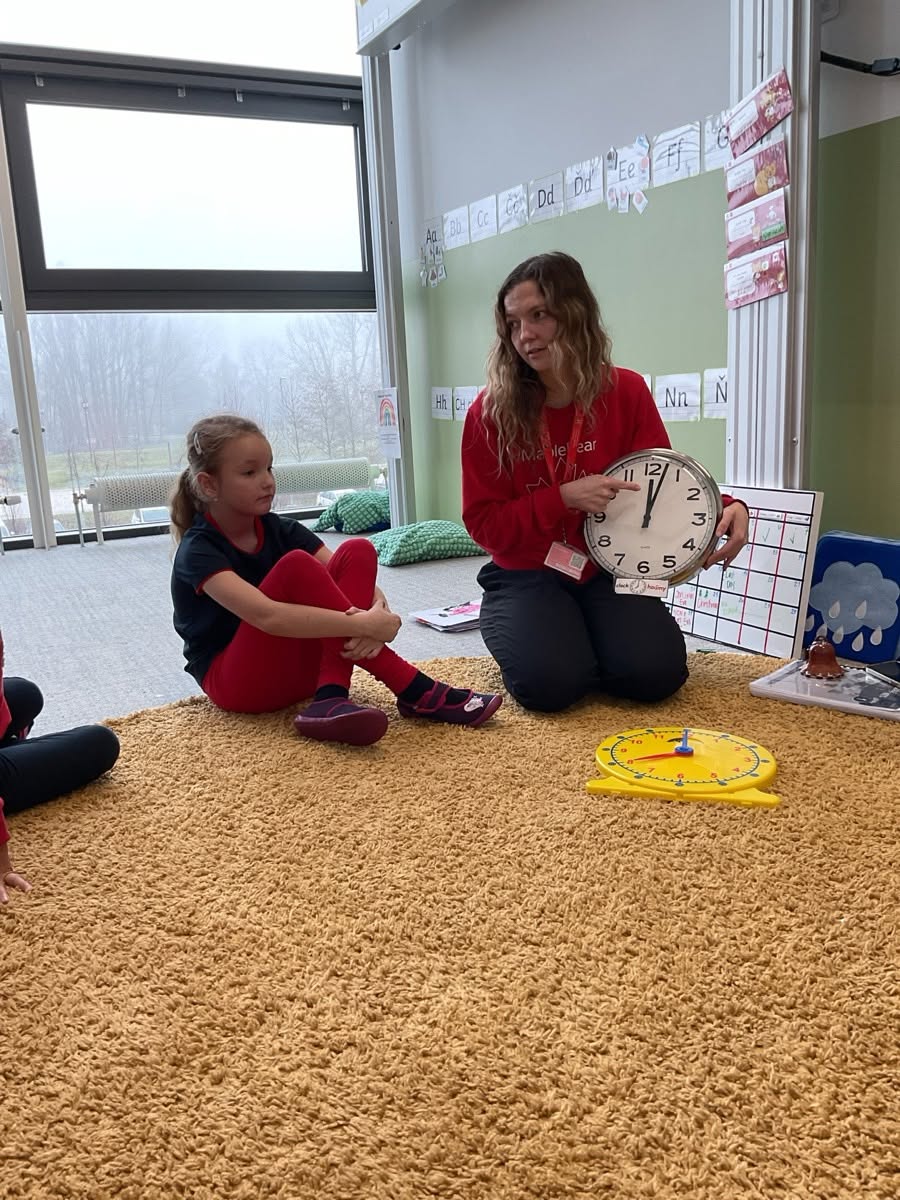
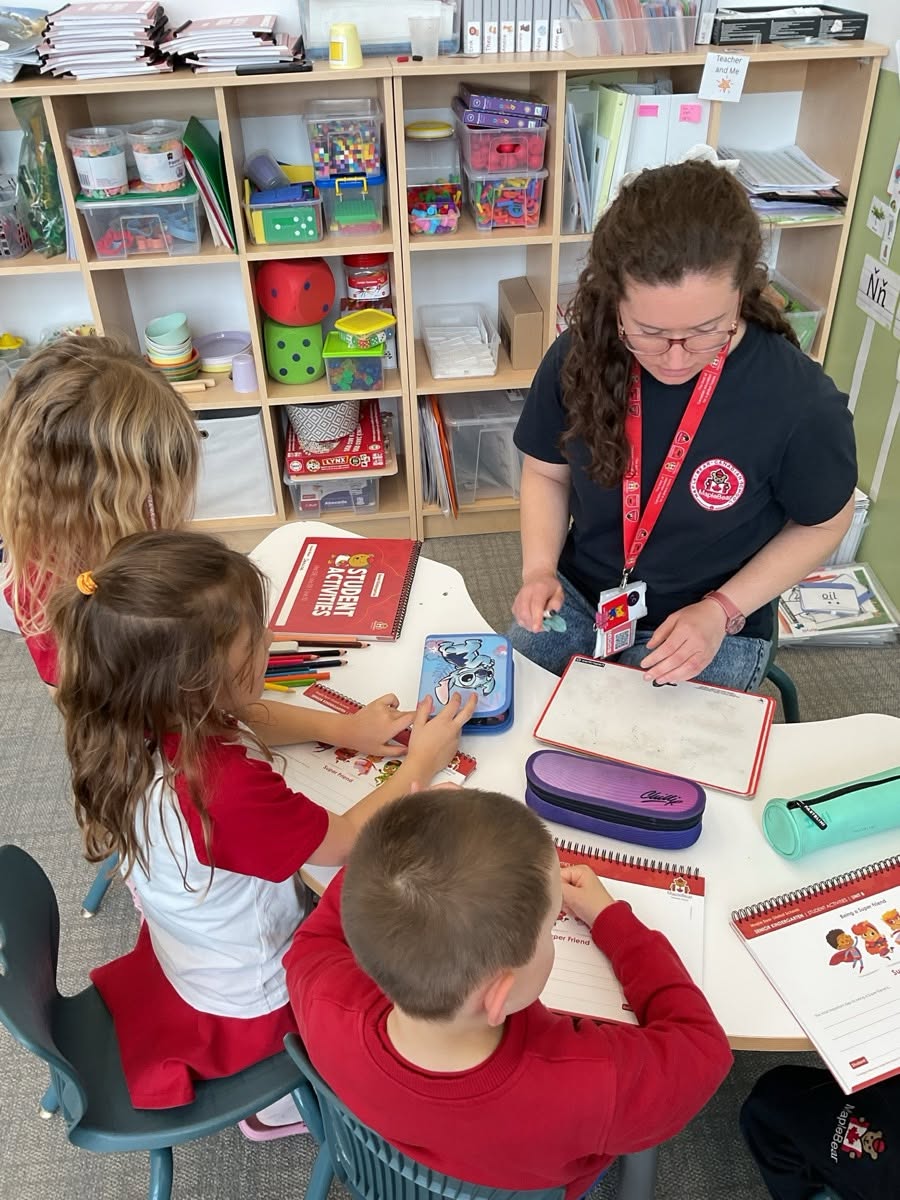
There are two full-fledged teachers in the classroom, not a teacher and an assistant. Each of them leads their part of the instruction, and for part of the day, they work with the students together. This allows them to better divide the class into smaller groups during lessons, respond to the different paces and needs of students, and offer them more individual support and challenges. At the same time, Czech and English are naturally connected within a single educational program, instead of functioning as two separate worlds.
At Maple Bear, approximately half of the instruction takes place in Czech and half in English. However, this does not mean that students have regular subjects for half the day and only English lessons for the other half. Part of the school content is taught directly in Czech and part directly in English.
In practice, a student may have mathematics in Czech one day and in English another time. Similarly, both languages alternate in science topics, art and music education, or sports. In addition, students have separate Czech language and English language lessons.
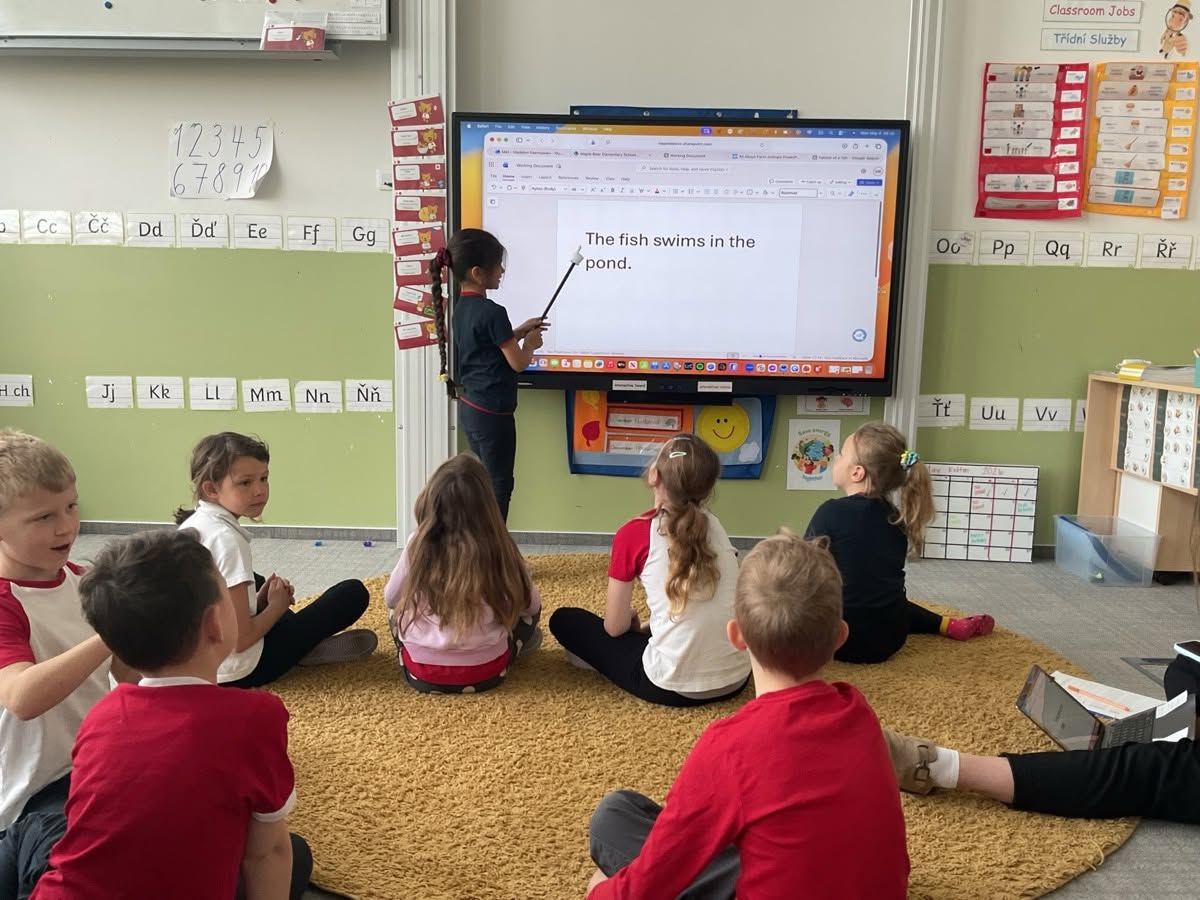
English thus does not become just a subject that students learn. It becomes the language in which they learn. In a lesson conducted in English, they might solve a mathematical problem, observe a natural phenomenon, work in a group, create, or explain their process. They use the language because they truly need it at that moment for understanding, communication, and work.
We do not expect students to understand everything or speak fluently from the first day. Some children start without much experience in English, while others already use it very confidently. Therefore, teachers work with each student according to their current level. They help with demonstrations, gestures, pictures, objects, repetition, and practical activities. As understanding grows, the student gradually begins to use the language more naturally and accurately.
Czech and English-speaking teachers plan the instruction together, so Czech and English are not two separate programs. Students move naturally between them during the week and use both languages for thinking, solving tasks, cooperation, and communication.
We pay equal attention to high-quality Czech. We systematically develop reading comprehension, written and spoken expression, work with text, and the ability to accurately formulate one’s own thoughts. For us, bilingual education does not mean replacing Czech with English. The goal is for students to have a solid foundation in the Czech environment while also being able to truly use English in learning and everyday life.
It is not necessary to know perfect English or Czech before starting school. What matters is that every child has the space to develop both languages from the level they are currently at.
The goal of our approach is not to raise a child who has “good English.” The goal is for them to be able to think, learn, and communicate just as naturally in both Czech and international environments.
At the same time, our way of teaching is not just based on the experience of a single team in Brno. We are part of the international Maple Bear network and work with methodology, educational materials, and experience that have been developed across the network over the long term. Our teachers are thus not alone in implementing bilingual and Canadian-inspired education.
In one class, one student may understand a new principle immediately and need a further challenge, while another may benefit from trying it again with an aid, seeing another example, or having more time for the task.
Therefore, we do not expect the same path to the same result from everyone. Having two teachers in the classroom also gives us more options to work in smaller groups and respond to what specific students need at the moment. For example, part of the class can work independently in a center while the teacher goes over a more difficult principle again with a smaller group or, conversely, offers a more demanding task to those who are ready to move forward.
For example, for the same mathematical goal, students can work with numbers of varying difficulty, and for reading, with texts corresponding to their current level. This is not about lowering standards. It is about ensuring that no child is lost or bored in the long term.
For us, assessment is not just a grade at the end of a topic. It is part of everyday teaching and helps us continuously decide what the next step for a specific student should be.
At the beginning of a new topic, teachers find out what students already know, what they understand, and where they might need more support. During lessons, they then monitor their work, ask about their process, conduct interviews, and work with the results of tasks, projects, or other activities. Thanks to this, we do not wait for a final test to find out that someone did not understand something. We can adjust the instruction continuously.
Feedback does not just tell the student what was wrong. It helps them understand what they have already mastered, what their next goal is, and specifically what they can do to move forward. Gradually, they also learn to evaluate their own work, name their strengths and areas they want to work on, and take greater responsibility for their own learning.
We want to provide the same overview to parents. During the school year, they therefore receive a more comprehensive assessment in November, January, April, and June, which shows not only the current result but also the student’s development over time, their strengths, and further goals.
Tripartite meetings—joint meetings between the student, parent, and teacher—are also an important part. During these, the student is not just someone the adults talk about. They gradually learn to describe for themselves what they are succeeding at, what they are working on, and where they want to move. The parent thus gains a much deeper picture than just a number or a grade.
For us, school is not just a place where students acquire knowledge. It is equally important that they learn to think about information, formulate their own opinions, listen to others, cooperate, and look for solutions when the answer is not immediately clear.
We therefore develop critical thinking directly within regular lessons. Students learn to ask “why,” compare different options, look for evidence for their conclusions, explain their own process, and accept that the same problem can have multiple paths to a solution. Through projects, discussions, and group work, they also learn to divide roles, reach agreements, present their own ideas, respond to different opinions, and achieve a result together.
For us, education also includes working with emotions and relationships. Students learn to name what they are experiencing, manage frustration, ask for help, work with mistakes, and resolve common conflict situations with respect for themselves and others. We do not view a mistake as a failure, but as a natural part of the learning process.
We also gradually support independence, resilience, and responsibility. The student learns to complete a task, persevere even if the solution does not come immediately, accept feedback, and think about what they can do differently next time. The goal is for them to take away from school not only what they have learned, but also the ability to keep learning, work with others, and confidently handle new situations.
One of the most important things a child can take away from school is the feeling that learning is not something they have to endure. It is something that helps them understand the world. That is why we want to support natural curiosity and inner motivation, so that students can gradually take responsibility for their learning and not lose the desire to discover new things even after leaving school.
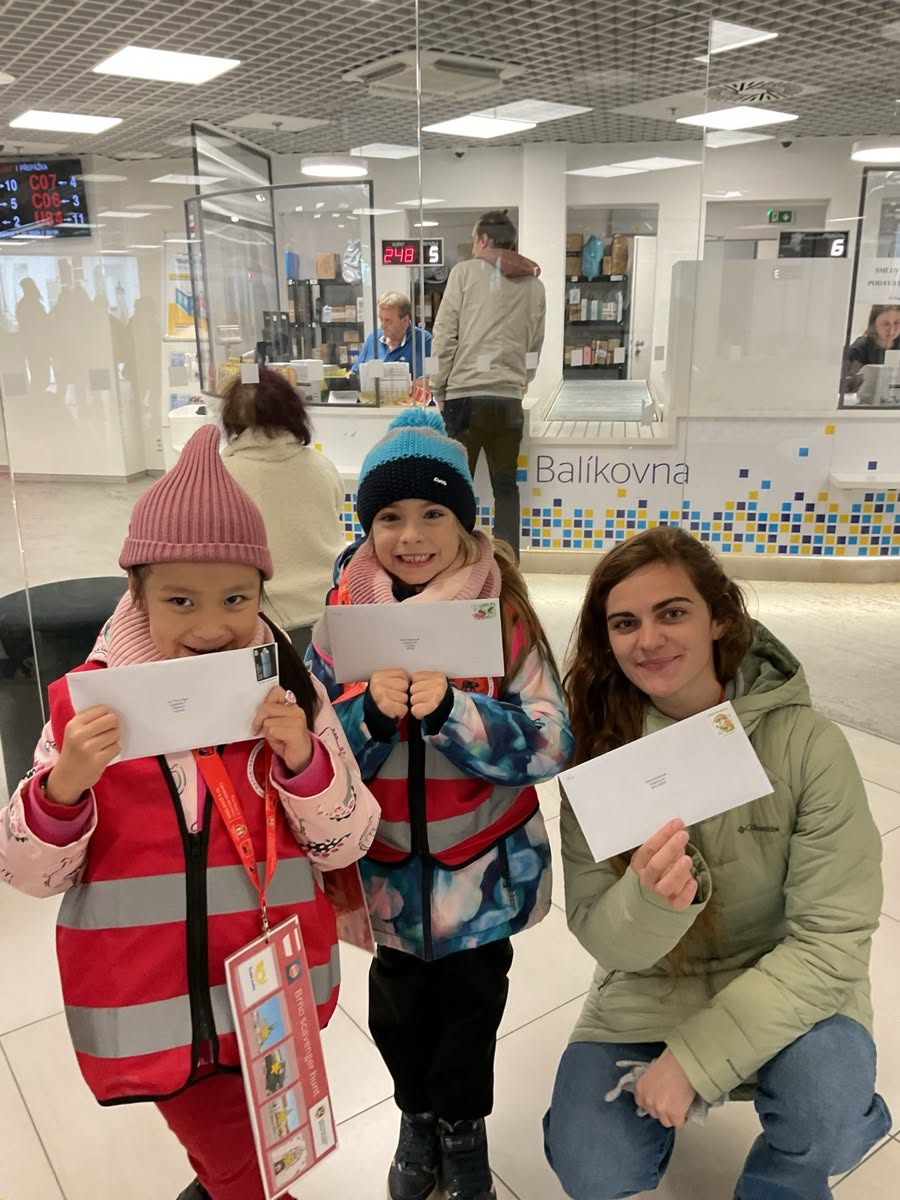
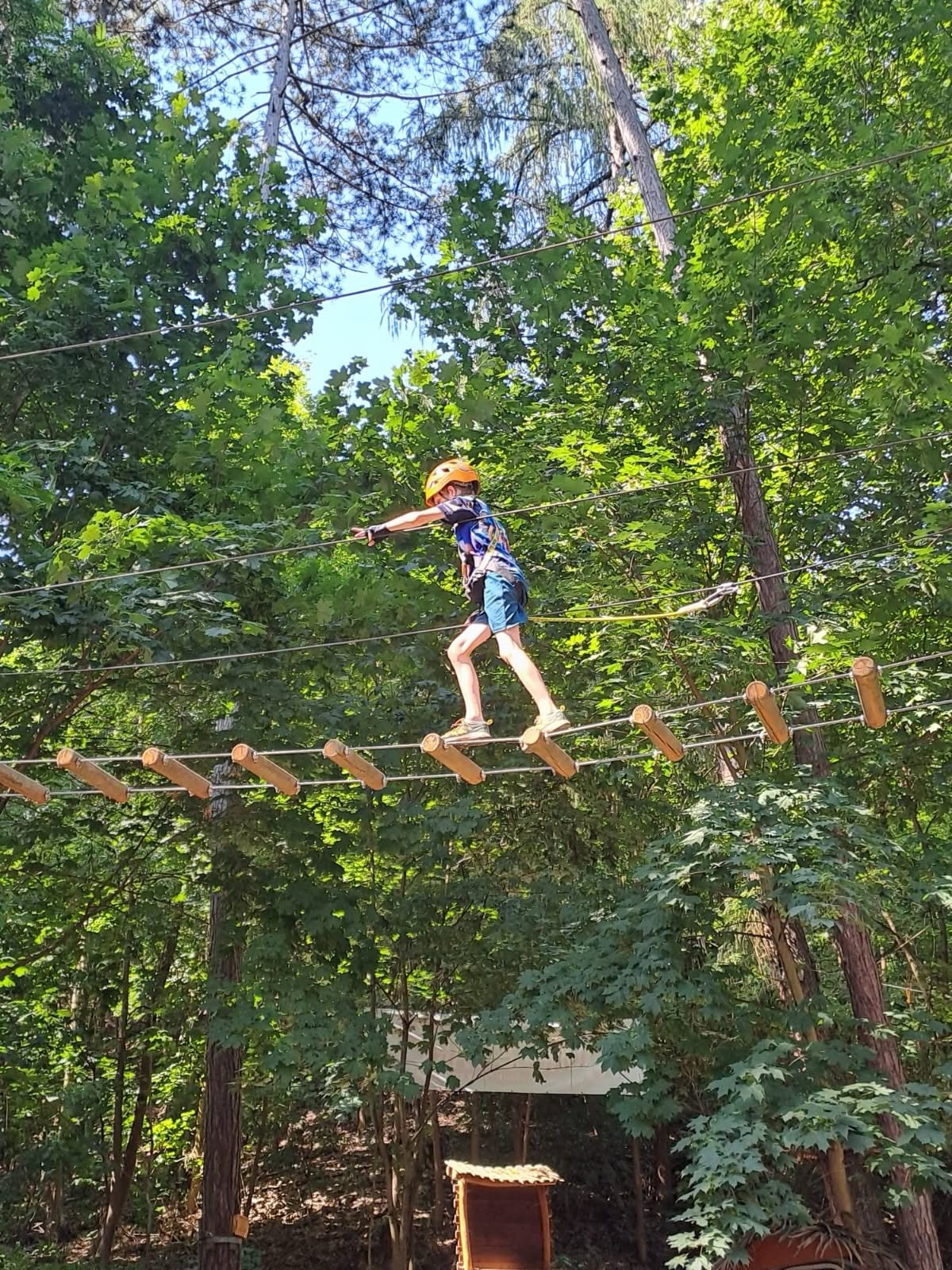
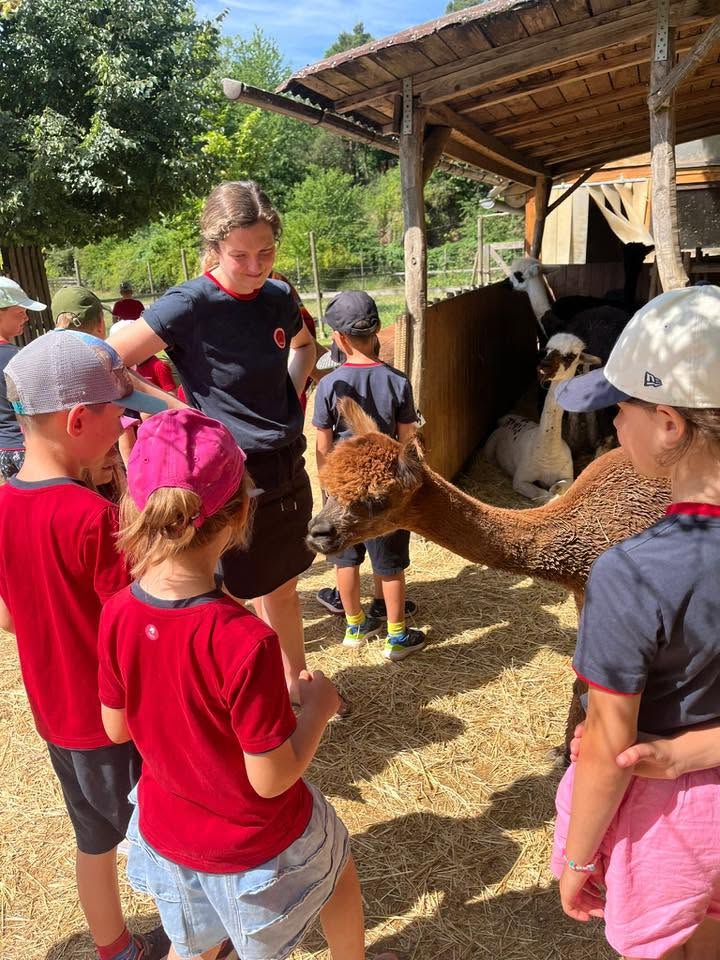
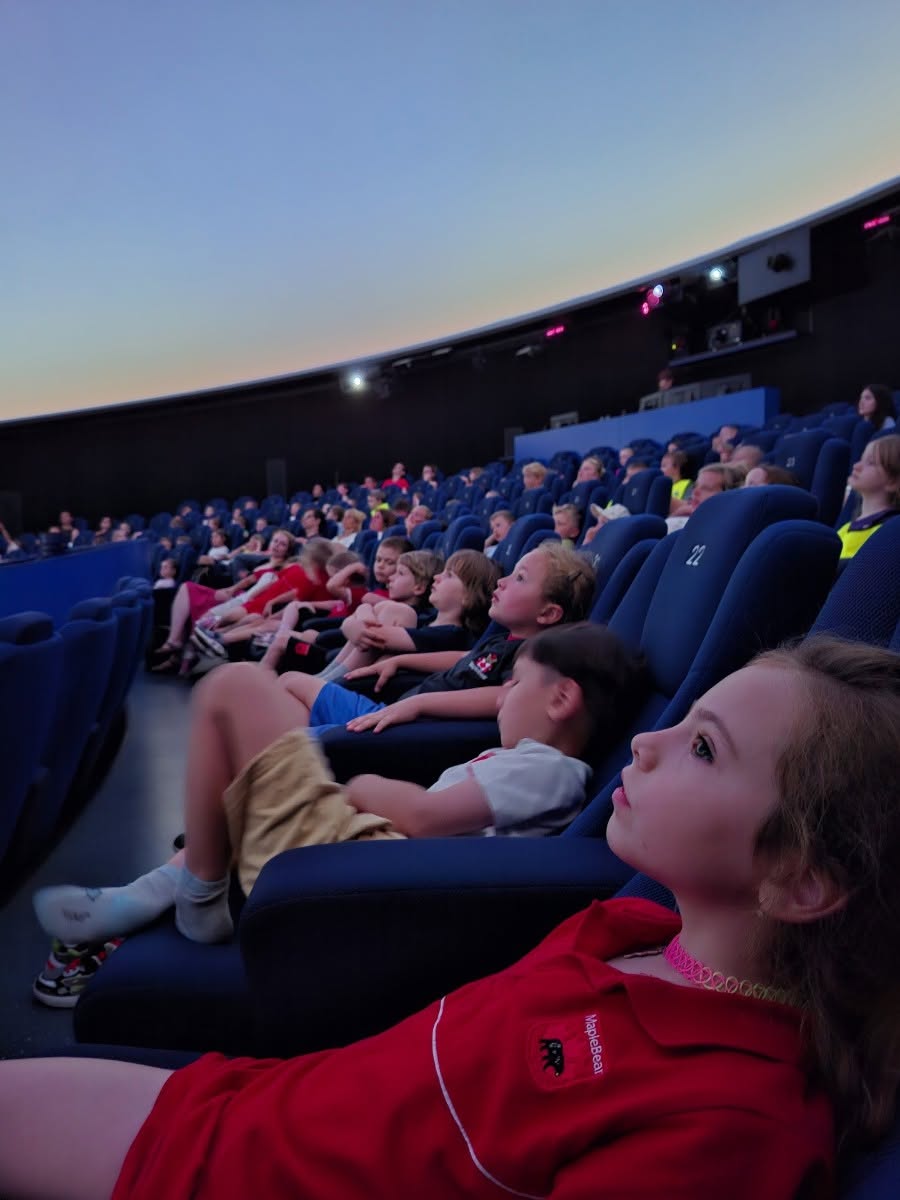
We want students to see that what they learn in school also exists in the world around them. Therefore, we supplement instruction with excursions, trips, visits to interesting places, meetings with experts, and experiences outside the classroom.
Whenever possible, we connect these with topics the students are currently studying in class. Learning is also followed by the afternoon after-school club, where free play alternates with planned activities, such as crafting, science, drama, or outdoor time.
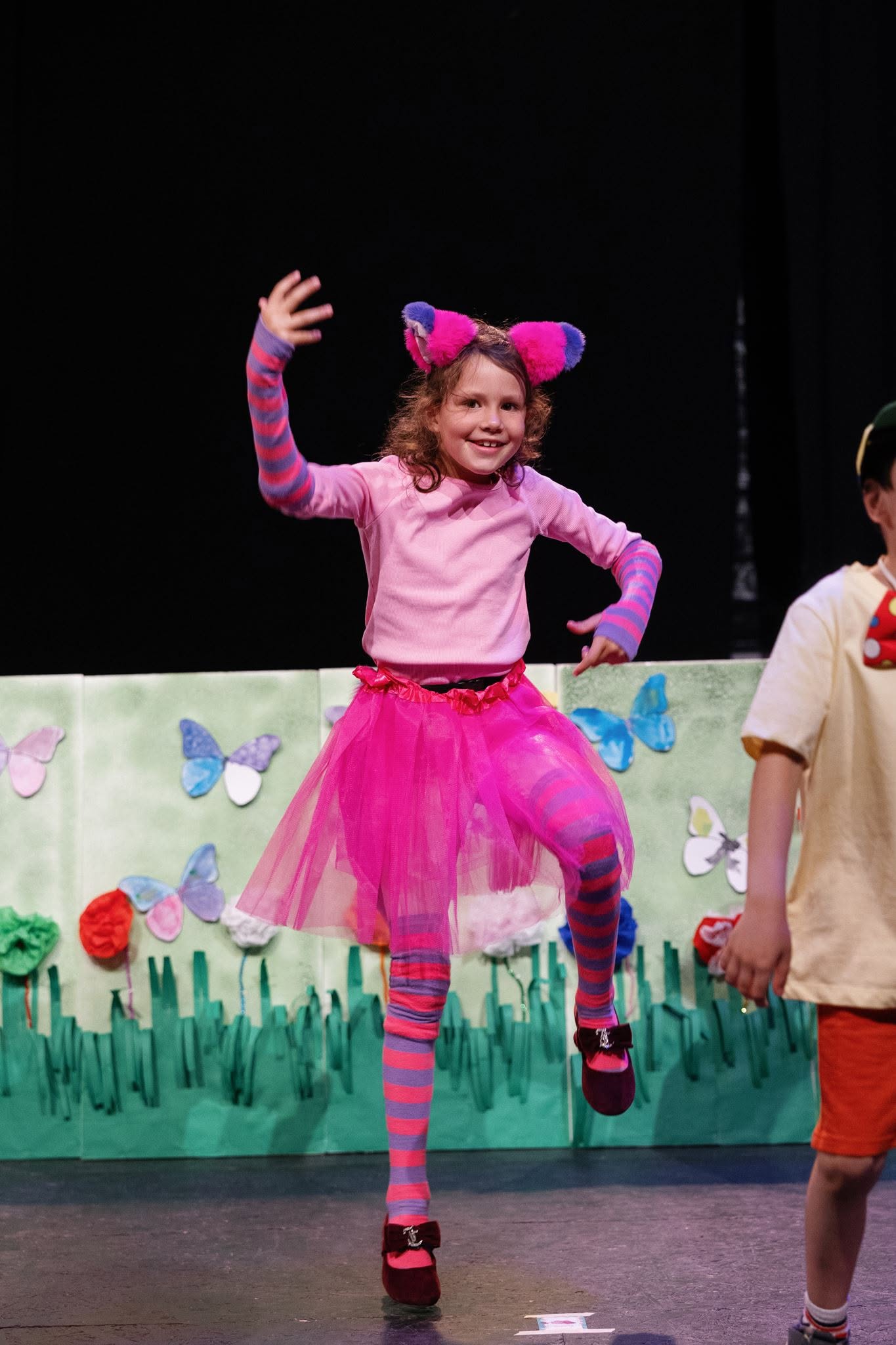
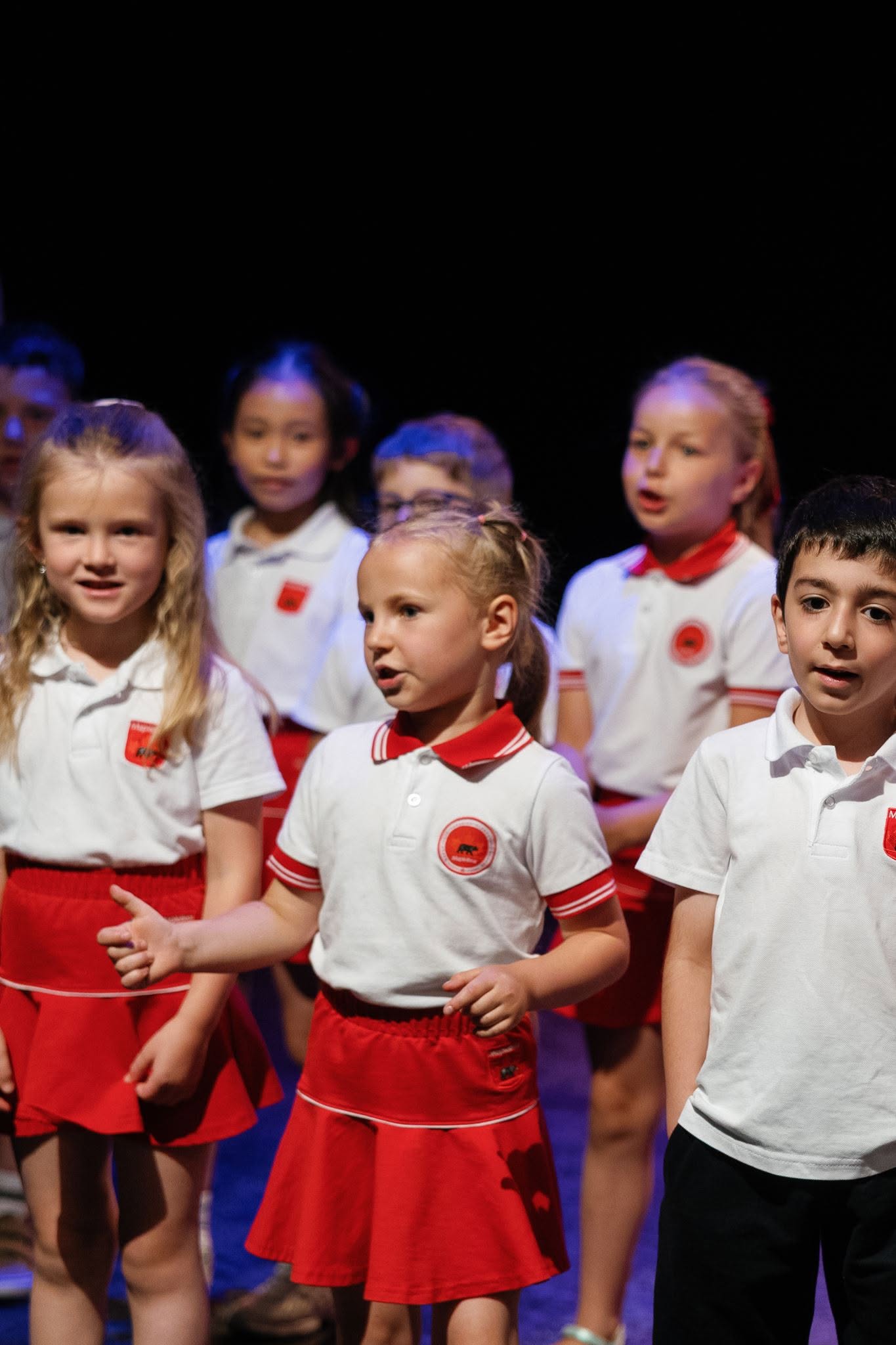
Throughout the year, we also offer optional clubs based on student interests and current availability, such as choir, musical theater, science club, or LEGO robotics.
These experiences are not just something extra. Through them, students develop independence, self-confidence, communication, cooperation, and the ability to handle new situations. We want them to understand that learning does not only happen over a worksheet, but everywhere they explore, create, experiment, and connect with the real world.
"We are extremely satisfied and we want to thank you for the progress we see with Matýsek. It is also thanks to you. We like it very much with you."
"We chose Maple Bear Brno elementary school mainly because of the bilingual environment. Our daughter had previously attended an English kindergarten, and we wanted her to improve in Czech as well. Gradually, she started speaking more Czech, composing full sentences, and most importantly, she stopped being so afraid to speak and express her opinion. She is much more confident. We have already recommended Maple Bear Brno to other parents and would definitely recommend it again."
"Péťa really likes it at your school. The teaching is very diverse; they work with different materials, do projects, go outside, and have many interesting challenges. He likes English, and after a few weeks, it was clear that he had become significantly more talkative in it again. He feels good in the group, and the whole team is great. Maple Bear Brno gets an A* from us."
"We searched for a long time for a school that would truly suit us. At Maple Bear Brno, we were convinced by the combination of Czech and Canadian education and instruction in both Czech and English. Today, we mainly see that our son goes to school with enthusiasm, has great friends, and takes away new knowledge and skills every day."
"We were looking for a school with Czech roots and at the same time really intensive English. At Maple Bear, we were impressed by the child-centric approach and experienced teachers. The most important thing for us is that our son feels safe at school, has friends and is still looking forward to school in the morning."
"My daughter is looking forward to school, which is the most important thing for us. We appreciate English, teaching with native speakers and also regular photo reports, thanks to which we have an overview of what children are experiencing at school."
"My son goes to school every day with enthusiasm and in the afternoon we often have to convince him to go home. This is probably the best confirmation for us that we have made a good choice. ”
"We are very happy to have Maple Bear in Brno. Children really like going to school and often don't even want to go home. We see great progress in them, they learn to write, read, develop Czech and English and gain a lot of new skills. ”